Design leader focused on clarity, alignment, and execution
I help organisations make sense of complexity — not just through better design, but through better alignment, clearer systems, and shared understanding.
My focus is not just on designing solutions, but on enabling teams to make better decisions, align around shared goals, and move ideas into execution.
Explore selected work — or dive deeper into how I lead teams and systems.
Trusted by teams at organisations like





What others say
“Your leadership style is a mix of aspiration and pragmatism.”
- Justin Stach, Head of Design, Tesco PLC

How I think
My approach to leadership is grounded in systems thinking, research, and making complexity visible — so teams can act with clarity and confidence.
Servant Leader
I lead for the team, not above it.
My role is to remove obstacles, create clarity, and enable others to do their best work.
“I lead by doing, listening, and empowering — not by managing from afar.”
Research-driven Thinker
I challenge assumptions with evidence.
I use research, feedback, and data to shape decisions — especially where opinions are strong and clarity is low.
“I don’t bluff — I ask, learn, and validate.”
Systems Thinker
I look beyond individual touchpoints to understand the system as a whole.
Because most problems are structural — not isolated.
“You can’t improve outcomes without understanding the system that produces them.”
Turning thinking into practice requires structure, facilitation, and consistent ways of working.
How I work
I turn complexity into shared understanding — and shared understanding into action.
Making complexity visible
I map journeys, systems, and decisions to create clarity across teams.
This helps organisations see where things break — and where they can improve.
“If it’s not visible, it won’t be owned.”
Facilitating alignment
I bring stakeholders into the process through workshops, co-creation, and shared artefacts.
Alignment is not a meeting — it’s something you design.
“You can’t prototype fairness without your stakeholders in the room.”
Enabling teams
I coach teams to run research, synthesise insights, and take ownership of decisions.
The goal is not dependency — it’s capability.
“Real change happens when people feel ownership — not when they’re handed solutions.”
Driving meaningful decisions
I help teams make better decisions by connecting research, strategy, and execution.
Sometimes that means building. Often it means choosing what not to build.
“Good design is as much about what you remove as what you create.”
What I use
I combine methods, tools, and facilitation techniques to structure complexity and enable teams to move forward with confidence.
Design & strategy frameworks
Service blueprints, journey maps, and system maps to create shared understanding
Roadmaps and prioritisation frameworks to guide decision-making
Career frameworks to scale design capability across teams
“A good map doesn’t just show where you are — it shows where you can go.”
Research & insight practice
Qualitative and quantitative research to uncover patterns and validate direction
Stakeholder interviews and alignment sessions to connect perspectives
Insight synthesis into clear, actionable narratives
“Research is only valuable if it changes how decisions are made.”
Tools & ways of working
Visual thinking, sketching, and storytelling to make ideas tangible
Documentation systems (Notion, playbooks, templates) to scale knowledge
Lightweight, adaptable processes that balance structure with speed
“Structure where it helps — flexibility where it matters.”
Facilitation & collaboration
Workshops, co-creation sessions, and visual facilitation to drive alignment
Structured rituals to embed learning, feedback, and reflection
Coaching leaders and teams to operate more effectively together
“Adoption begins in the room — not in the deliverable.”
Prefer to see this in action?
Explore a strategic case study — where these principles were applied
First 90 days as a design leader
When stepping into a new leadership role, I focus on listening, alignment, and building early momentum.
Typical approach:
Deeply understand teams, culture, and blockers
Through 1:1s, observation, and mapping patterns across roles, communication, and decision-making.
Map products, gaps, and opportunities
Using research, stakeholder mapping, and early synthesis to create a shared view of the system.
Establish early ways of working and rituals
Introducing simple structures for collaboration, feedback, and decision-making to build momentum.
Align leadership and clarify the team’s role
By framing a clear narrative, defining value, and co-creating direction with key stakeholders.
Selected leadership artefacts
A selection of artefacts that show how I operate as a design leader — making complexity visible, aligning teams, and enabling better decisions.
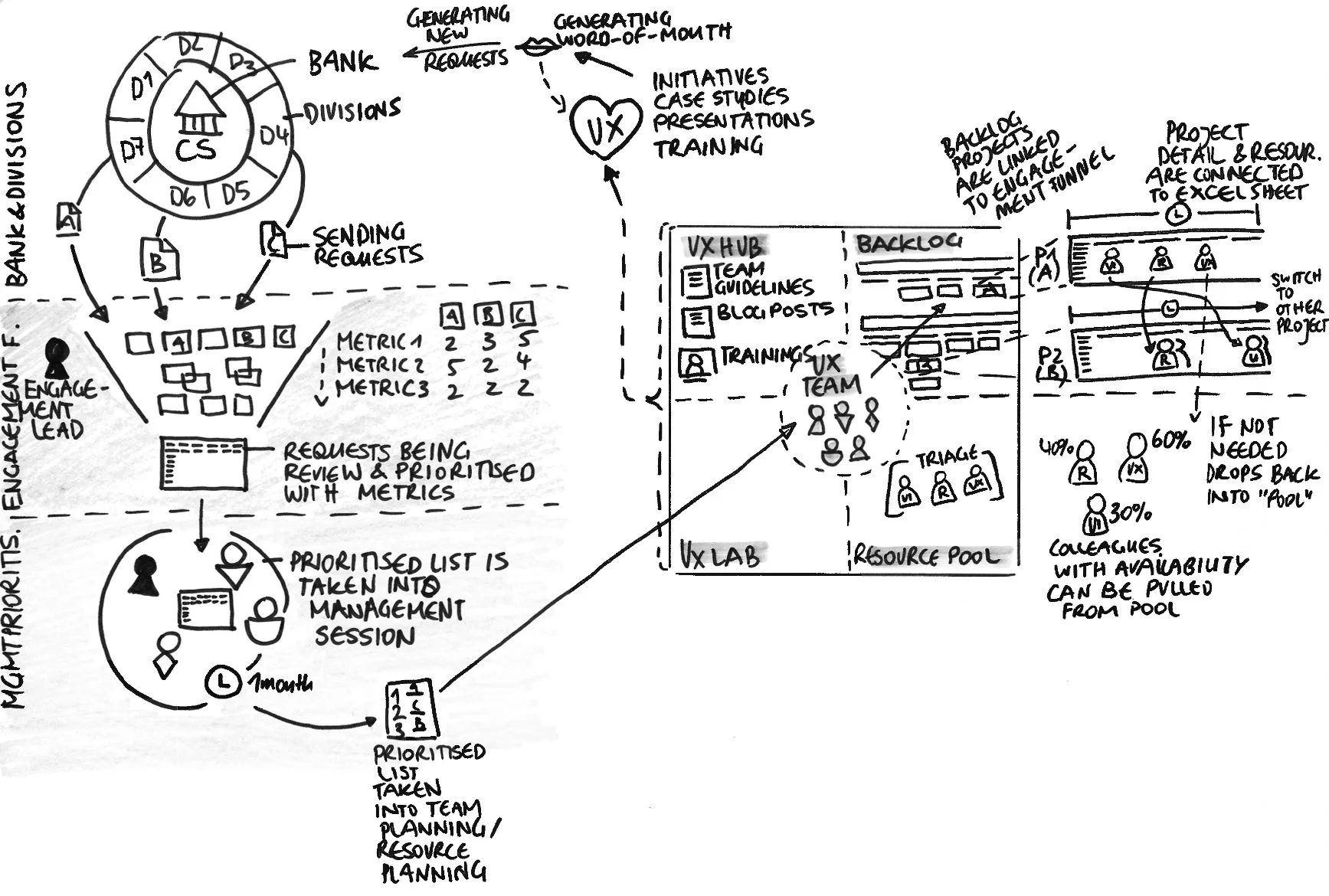
Team Structure Thinking — Designing team structures within organisational systems
Exploring how design teams integrate within the wider organisation, including engagement models and collaboration flows. Ensures structures support both delivery efficiency and strategic impact.
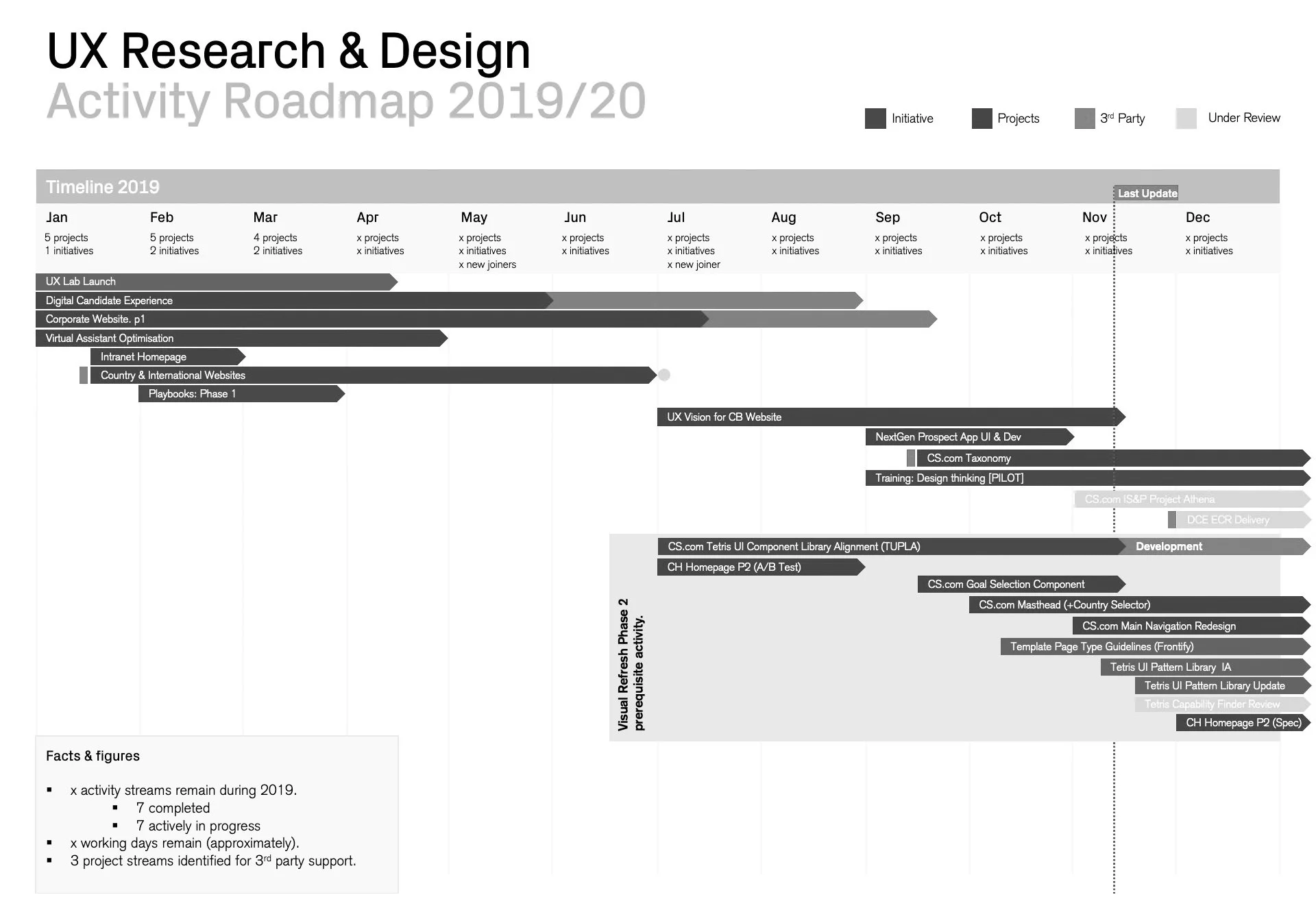
Roadmap — Connecting strategy to delivery through roadmaps
Developing roadmaps that align initiatives over time, balancing business priorities, team capacity, and long-term direction. Provides clarity and coordination across teams and stakeholders.
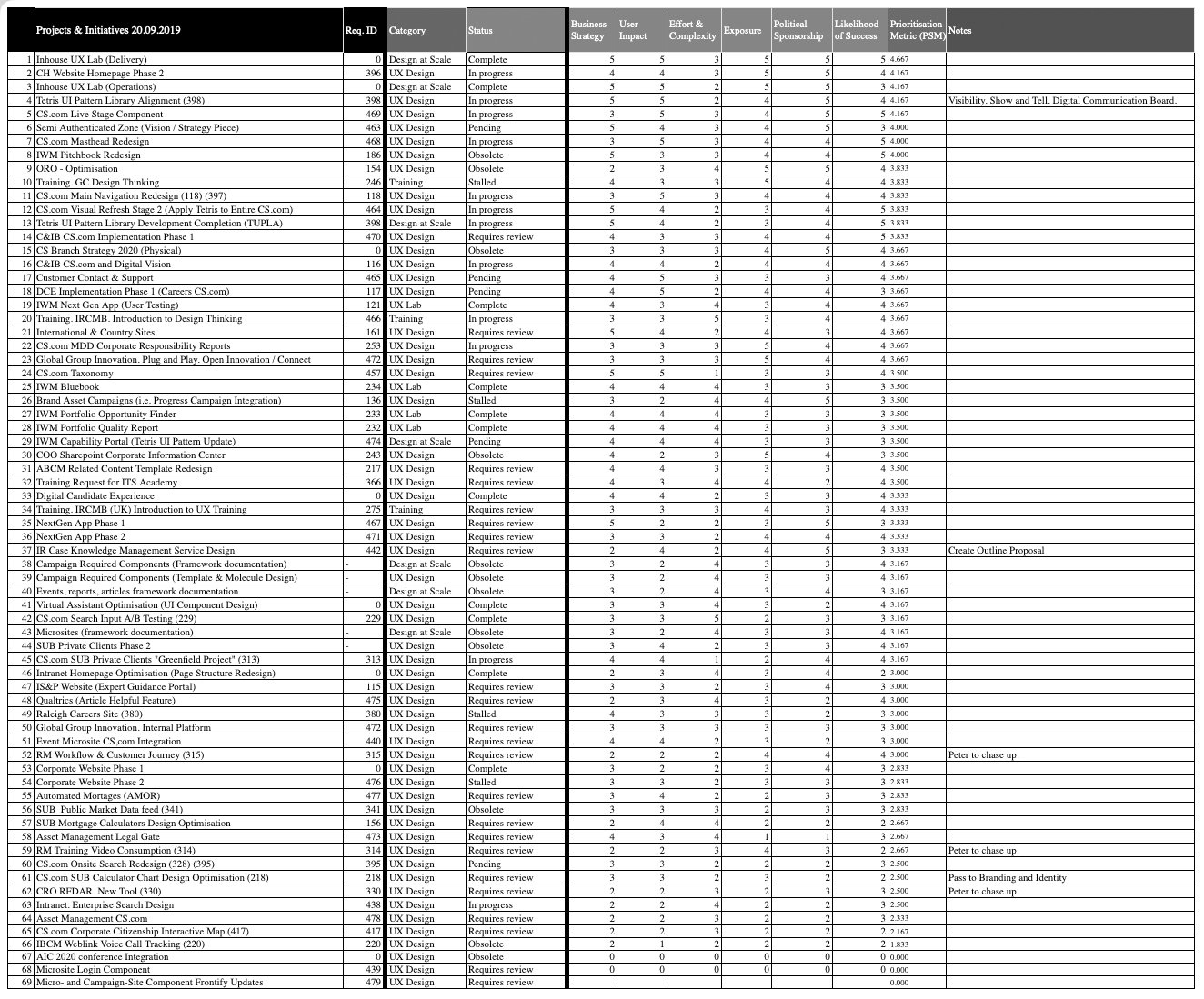
Project Prioritisation Backlog — Enabling transparent prioritisation and decision-making
Designing prioritisation models that assess initiatives based on value, complexity, risk, and impact. Enables objective decisions and ensures focus on the highest-value work.
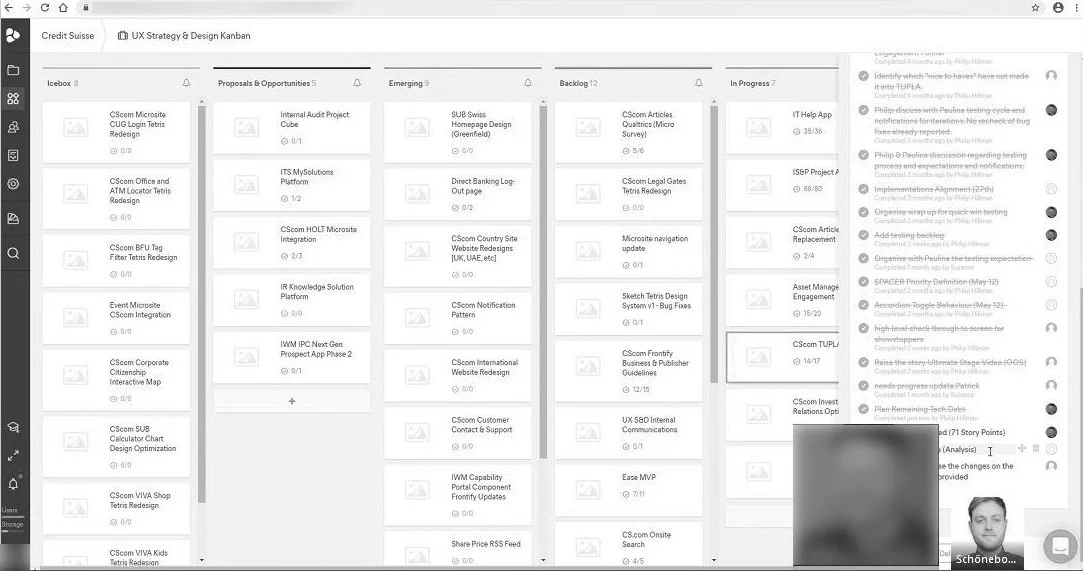
Team Planning Kanban — Running team operations and delivery
Establishing a Kanban-based operating model to manage workload, prioritise initiatives, and create visibility. Supports continuous delivery, team alignment, and effective resource planning.
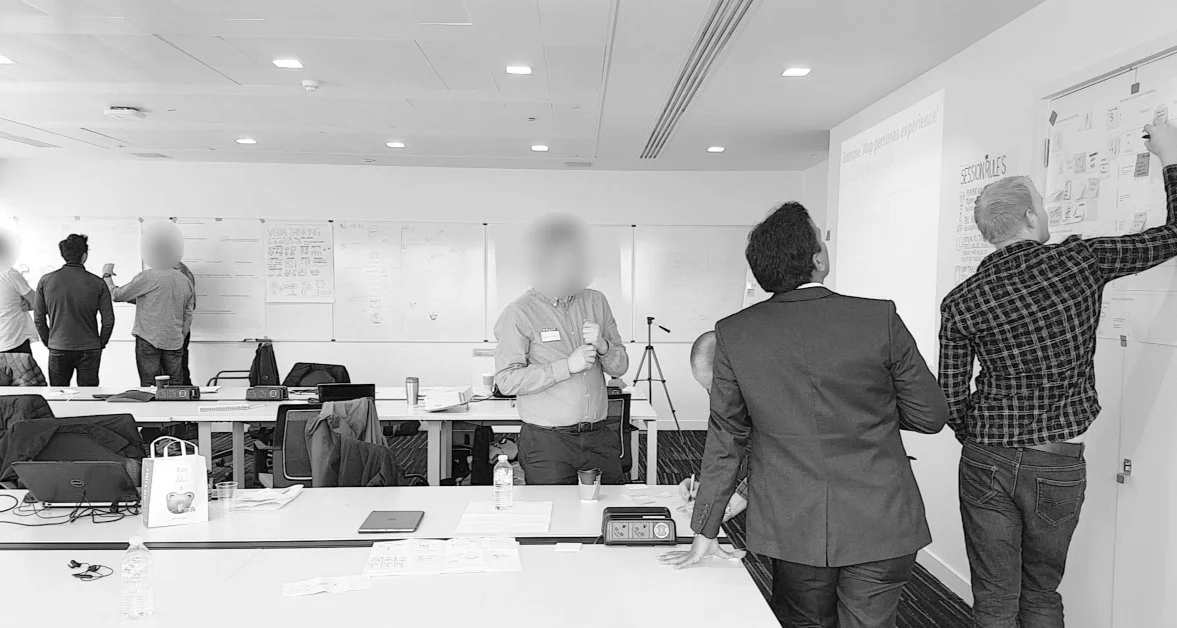
Team Development — Enabling team development through shared vision and practices
Facilitating workshops to define team vision, ways of working, and processes. Builds alignment, shared ownership, and a foundation for consistent and scalable practices.
How I show up in teams
Across different roles and organisations, people describe my impact in similar ways:
🧠 Service Design & Capability building
“Roman’s Service Design course left a lasting impact. He turned theory into practical tools our team used for weeks. The redesign between sessions showed his rare commitment to learning from feedback.”
— Rob Brown, Transformation Lead, Lloyds Banking Group Lab (Finance / Innovation)
🧑🏫 Coaching & Mentorship
“Roman’s mentorship was instrumental in my growth as a UX designer. He didn’t just give me tools — he helped me reflect, build confidence, and celebrate progress. His support shaped how I show up as a leader today.”
— Alexis Oh, UX Designer, Mentorship through Ladies That UX (Technology / Non-profit)
🤝 Cross-Team strategic enablement
“Roman helped unify how we talk about customer experience across teams. The playbook and templates he created at Tesco became our shared language and enabled scalable collaboration across departments.”
— Tristan Blackwell, Development Lead, Tesco PLC (Retail / E-commerce)
Publications
Leadership thinking is extended through published articles and curated series.
This includes:
Conversations with Leaders — exploring how leaders across industries think, decide, and operate in complex environments
Leadership re[framed] — a series examining leadership through unconventional lenses, connecting design, systems thinking, and insights from fields beyond design
Together, these publications explore how organisations move from fragmented effort to systems that enable better decisions, alignment, and outcomes at scale.