
Research
Understanding people, behaviours, systems, and organisational realities through collaborative, evidence-informed research practice.
Research has been a consistent part of my work across service design, facilitation, DesignOps, and organisational transformation. My practice combines qualitative research, operational systems, collaborative sense-making, and insight communication to help teams better understand people, challenge assumptions, and make more informed decisions.
Over time, this evolved beyond conducting interviews or usability testing into building reusable research tools, facilitation methods, synthesis systems, and collaborative research practices that support organisational learning and evidence-informed decision-making at scale.
481
People interviewed across retail, banking, healthcare, mobility, public sector, energy, and consumer technology contexts.
Multi-market reseach planning
ResearchOps budgeting and fieldwork estimation across multiple countries and up to 30 concurrent studies.
From insight to action
Research translated into workshops, strategy, journeys, playbooks, and organisational initiatives
Research systems developed
Research walls, field guides, user needs libraries, planning tools, synthesis approaches, and collaborative research artefacts.
Cross functional enablement
Research methods translated into workshops, guides, operational systems, videos, and collaborative learning formats.
60+
Research projects delivered across pre-discovery, ethnographic fieldwork, service design, organisational research, and strategic insight initiatives.
3000+
Research and facilitation methods analysed to identify recurring patterns, operational gaps, and reusable practices across teams and organisations.
70+
Research and innovation toolkits compared to understand how organisations operationalise learning, collaboration, and evidence-based decision-making.

Early fieldwork memory
During my first internship at a branding and packaging agency in Hamburg, I travelled to Tunis, Tunisia, to collect tissue packs for a competitor and inspiration study.
The interest was not the packaging itself, but the printed tissue imprints — many featuring more ornamental and North African visual motifs that offered a very different aesthetic language from products on the German market.
After two days travelling between supermarkets and local stores, I returned with a suitcase almost entirely filled with tissues and a lengthy conversation with airport security about why I was transporting 23kg of paper products.
It was an early reminder that research often begins with curiosity, field observation, and paying attention to cultural details hidden in everyday objects.
Selected research projects
Research methods, operational systems, and collaborative approaches applied across commercial, public sector, healthcare, and service design projects. A selection of projects that demonstrate how research informed strategy, service design, product development, and organisational decision-making.
KONE — Maintenance Service Transformation
Exploring how maintenance services could better reflect customer needs across different building environments through qualitative research, service design, and concept testing.
Research • Service Design • B2B Services
Type 2 Diabetes Support Service
A service design research project exploring behaviour change, emotional wellbeing, and long-term support for people living with Type 2 Diabetes.
Research • Healthcare • Service Design
Research explained
A collection of short explainers, internal learning content, and longer-form presentations exploring research practice, insight communication, and collaborative decision-making within organisations.
Why involve people in user research?
19-minute presentation
A longer-form talk exploring why research should become a shared organisational activity — helping teams build empathy, align around evidence, and translate insights into action.
Introduction to the purpose of research
2-minute research explainer
A concise introduction to the role of qualitative and quantitative data, and how evidence-based understanding helps teams design better services, products, and decisions around real human needs.
Research mindset and team principles
2-minute research explainer
A concise introduction to the mindset, behaviours, and collaborative principles that support effective research practice across teams and organisations.
Market research vs. insight research
2-minute research explainer
Explaining the difference between measuring markets and understanding human behaviour — and why deeper insight work matters for meaningful decision-making.
Research tools, methods, and operational systems
Reusable research guides, synthesis systems, operational tools, and collaborative frameworks developed to support research planning, participant understanding, insight generation, and organisational learning.
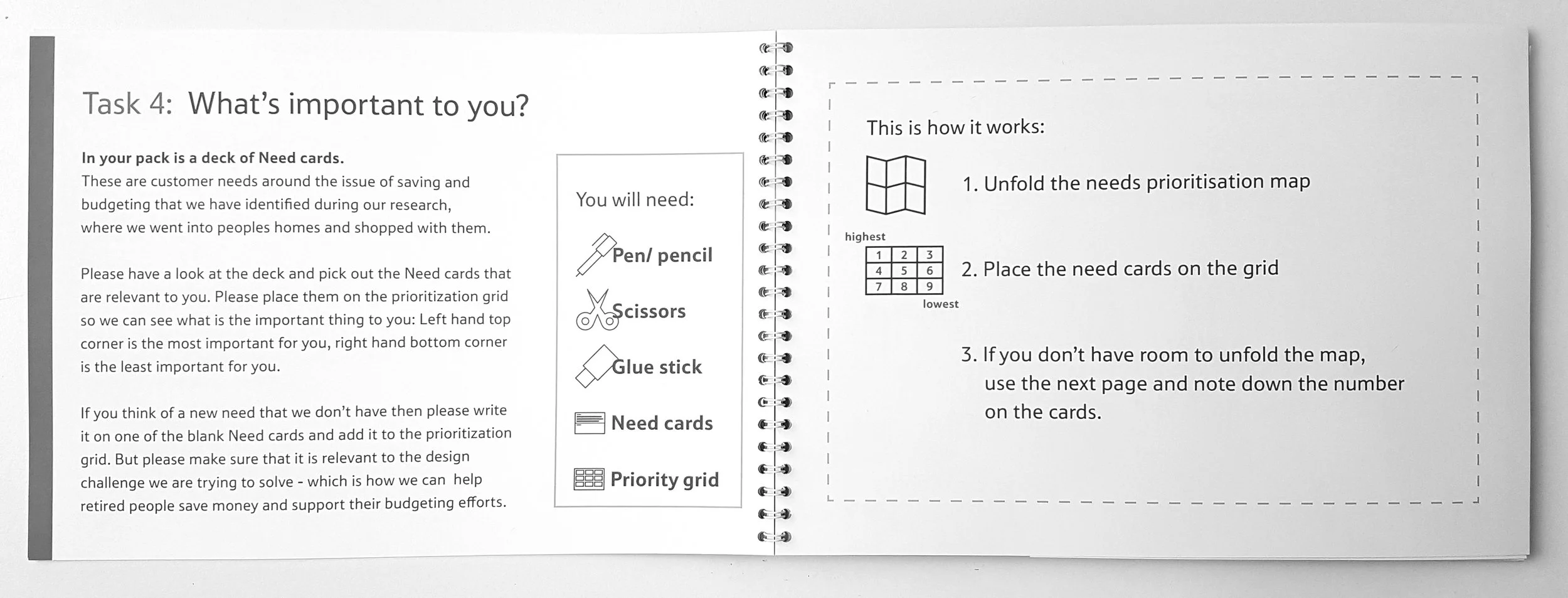
Little research guide
A printed booklet with checklists and flows, to help primarily guide non-researchers through an interview process.
Build for and with people, and iterated multiple times as part of an ongoing research project, ensuring
Simple working structure
Clear communication and prompts
Right format and size to be used in the fields
“The little research guide was an invaluable tool which allowed me to know what I was doing on the day, and to actually add value to the trip.” - Chris Lambert, Senior Analyst at Tesco PLC
UXR Cost Calculator
Originally built in a day to support urgent multi-market research planning, this lightweight calculator evolved into a reusable operational tool for estimating travel, fieldwork, and delivery costs across up to 30 studies.
By adjusting locations, researcher allocation, and operational assumptions, teams could quickly compare scenarios, generate projected budgets, and support planning discussions through a more structured ResearchOps approach.
The UXR Budget Planner (Version 2, available in the Practice section) expands the concept into a more interactive planning system with live data sourcing, scenario modelling, and support for multiple research study types.
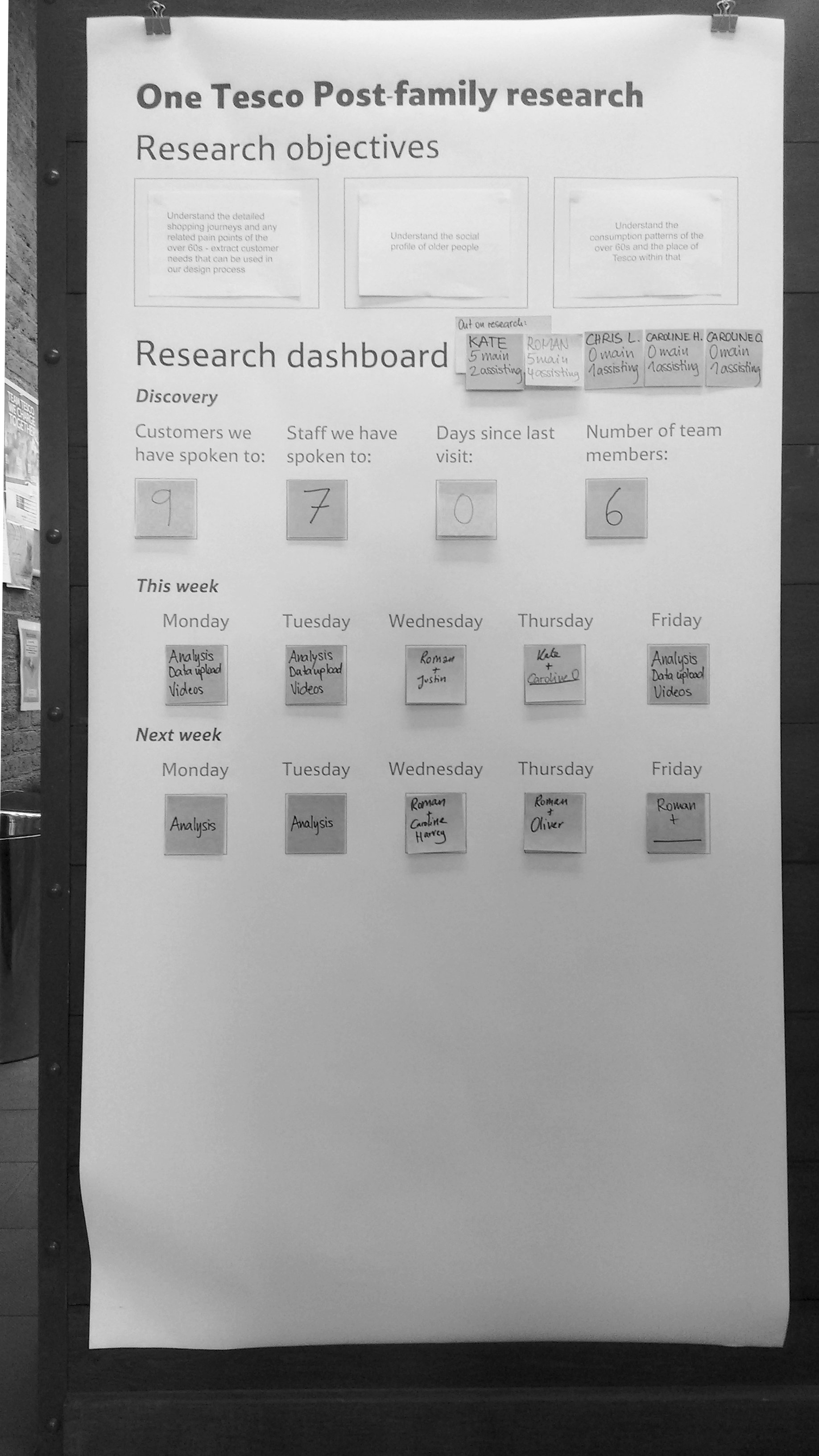
Research wall
A collaborative synthesis and insight-sharing system
Adapted from Government Digital Service practices, the research wall created a shared physical space for collecting observations, identifying patterns, tracking fieldwork activity, and communicating emerging insights across the team.
Practice reflection
As a physical artefact, the research wall became more than a synthesis tool. In the office it acted as an ongoing conversation starter that made the research process, fieldwork activity, and emerging learnings visible to non-designers and stakeholders passing by.
Learnings from conducting diary studies
During a research project exploring shopping experiences for parents with young children, we used a paper diary study to capture experiences between interviews and within participants’ everyday routines.
The project generated several practical learnings about conducting reflective research with busy participants.
1. Keep participation lightweight
Participants engaged more consistently when activities were concise, visual, and easy to integrate into everyday routines. Simpler prompts often produced richer reflections than longer exercises.
Practice reflection
This project reinforced that research methods should adapt to participants rather than expecting participants to adapt to the research process. Small operational decisions — format, tone, accessibility, and follow-up — can significantly influence participation quality and the depth of insight gathered.
3. Choose the right medium
The project highlighted the importance of selecting formats appropriate to the audience. Some activities may have benefited from more mobile-first interactions integrated into daily behaviours.
2. Physical artefacts create reflection
The diary pack itself became a conversation prompt, helping participants reflect on experiences between sessions and supporting richer interview discussions later on.
4. Follow-up builds trust
Light communication after sending the diary pack helped reduce unfamiliarity before interviews and created more natural, collaborative conversations with participants.
From research repository to interactive practice tool
Originally developed as part of a collaborative research and service design practice, the Customer Needs Library was designed to help teams capture, structure, review, and prioritise customer needs grounded in evidence.
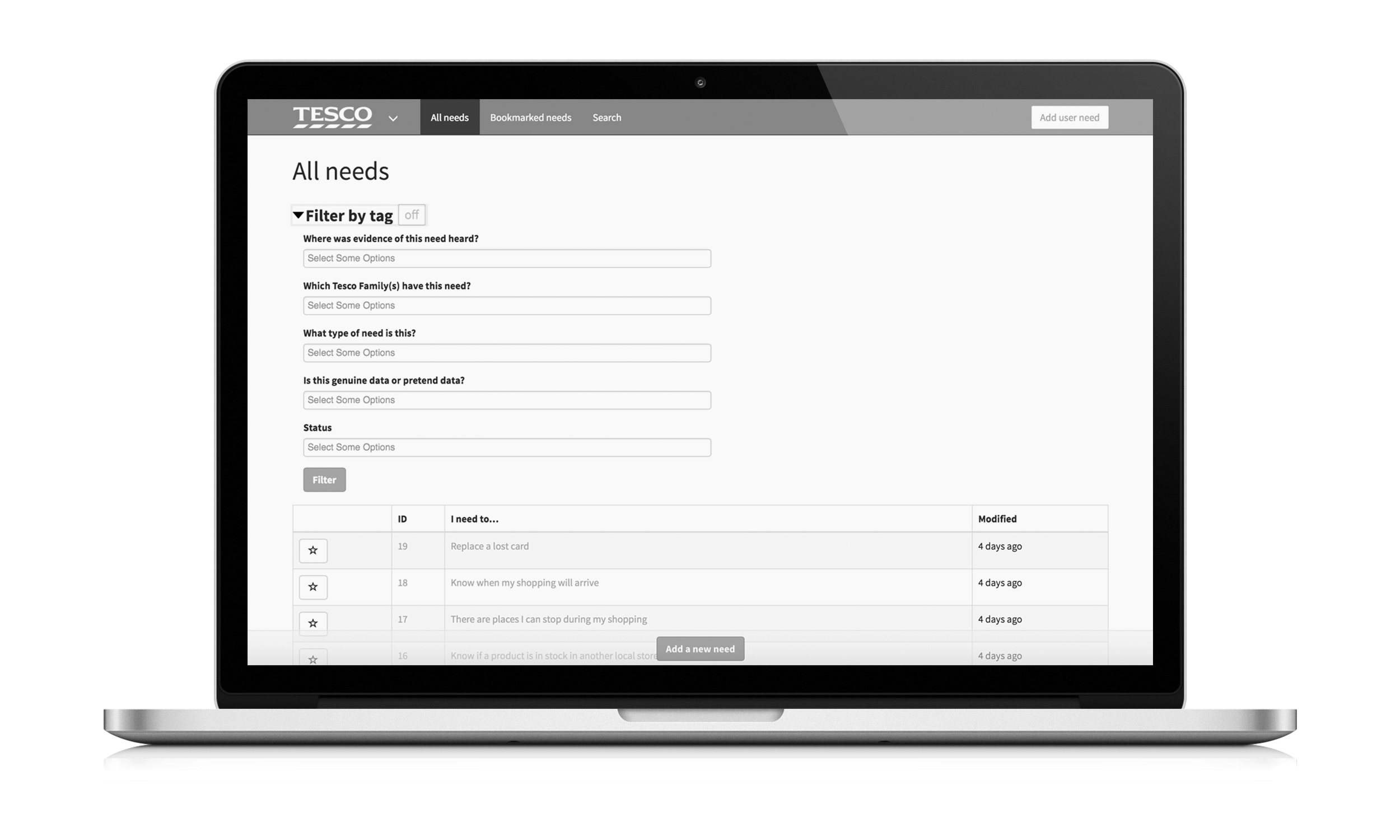
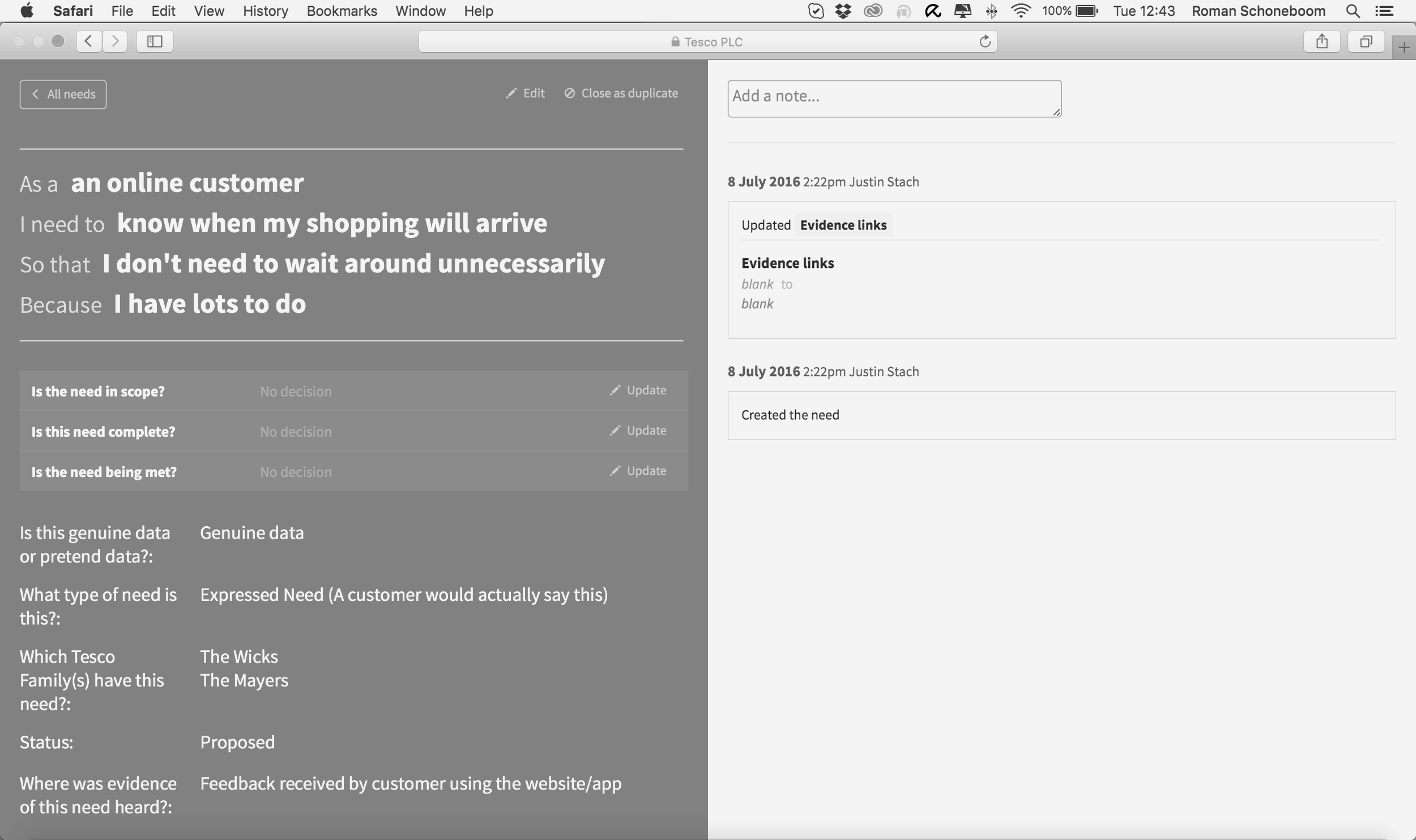
The original system combined structured user needs statements, linked research evidence, collaborative review workflows, taxonomy and tagging systems, and shared visibility across teams and disciplines.
An interactive recreation of the Needs Library can be explored in the Practice tools section.
Research in practice
Additional research artefacts
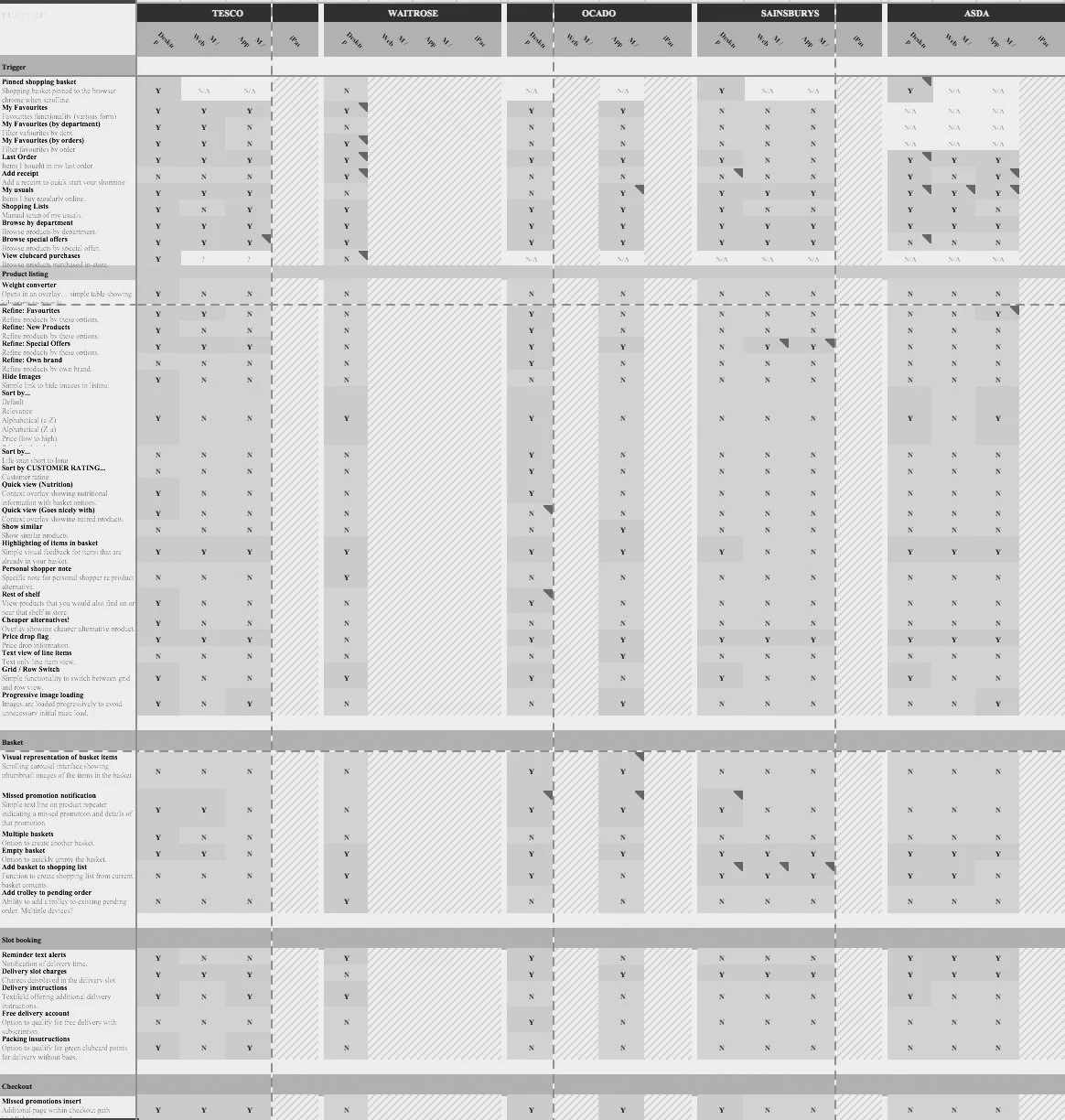
Competitor Analysis
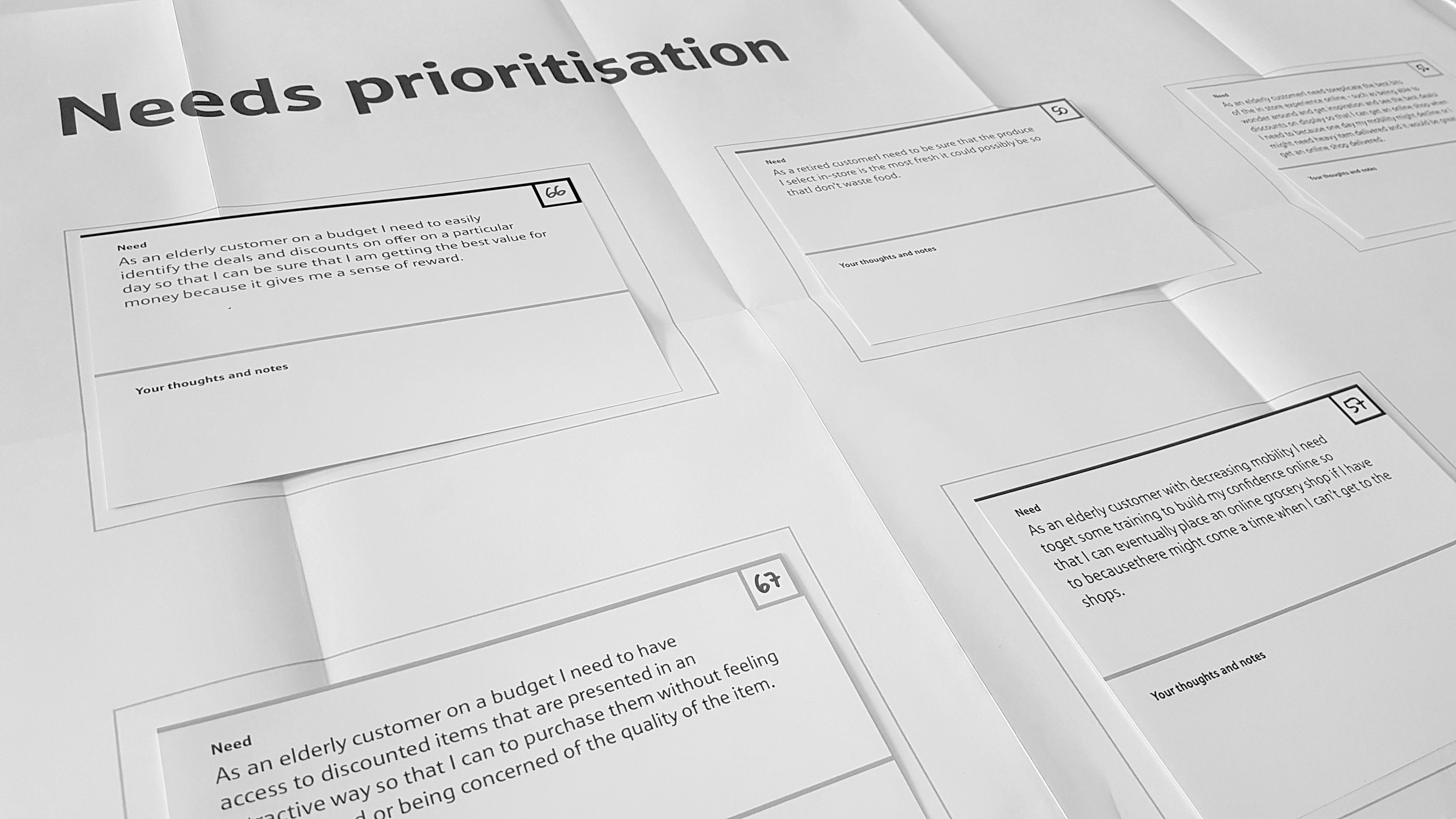
Needs Prioritisation
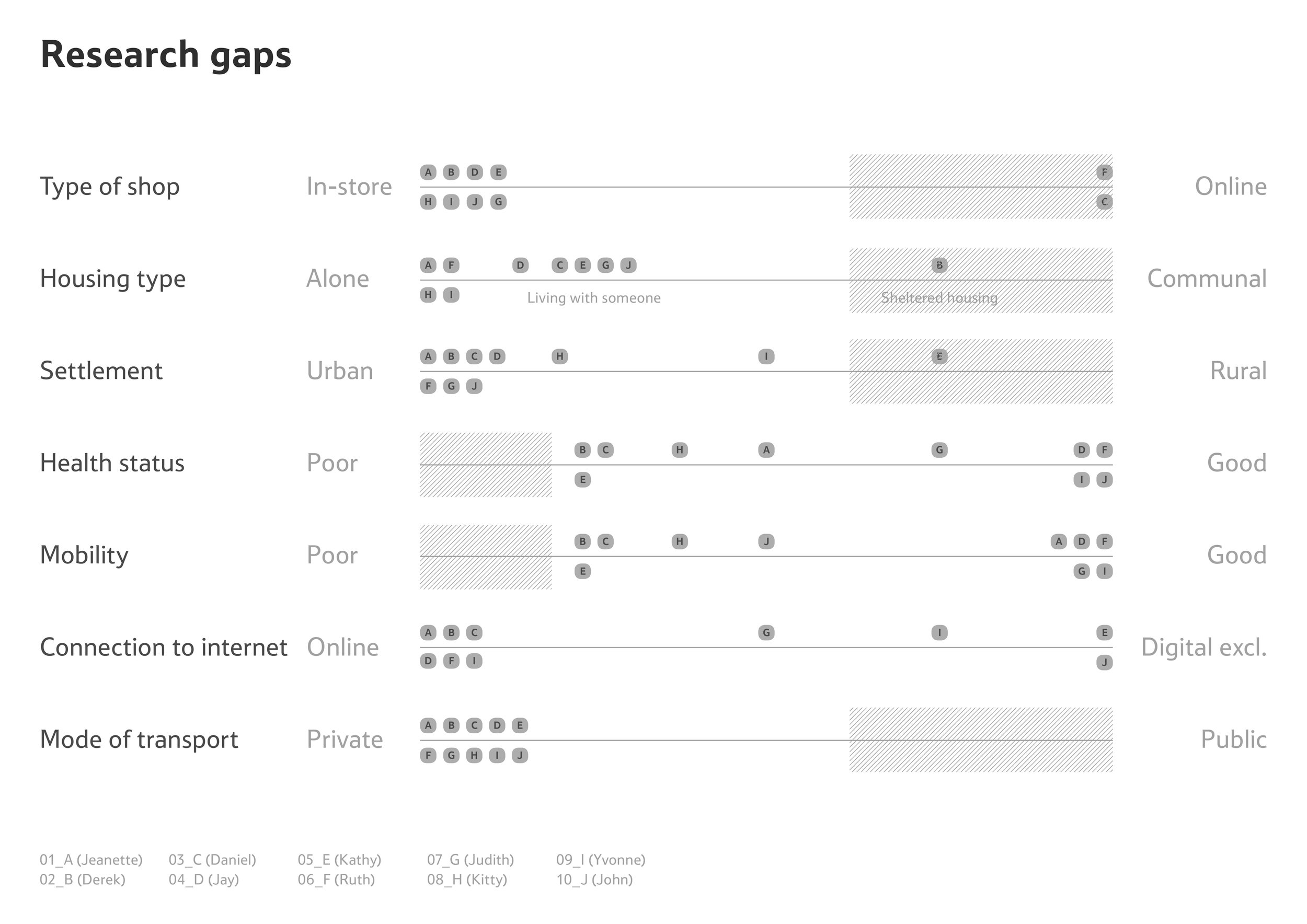
Research Gaps Analysis
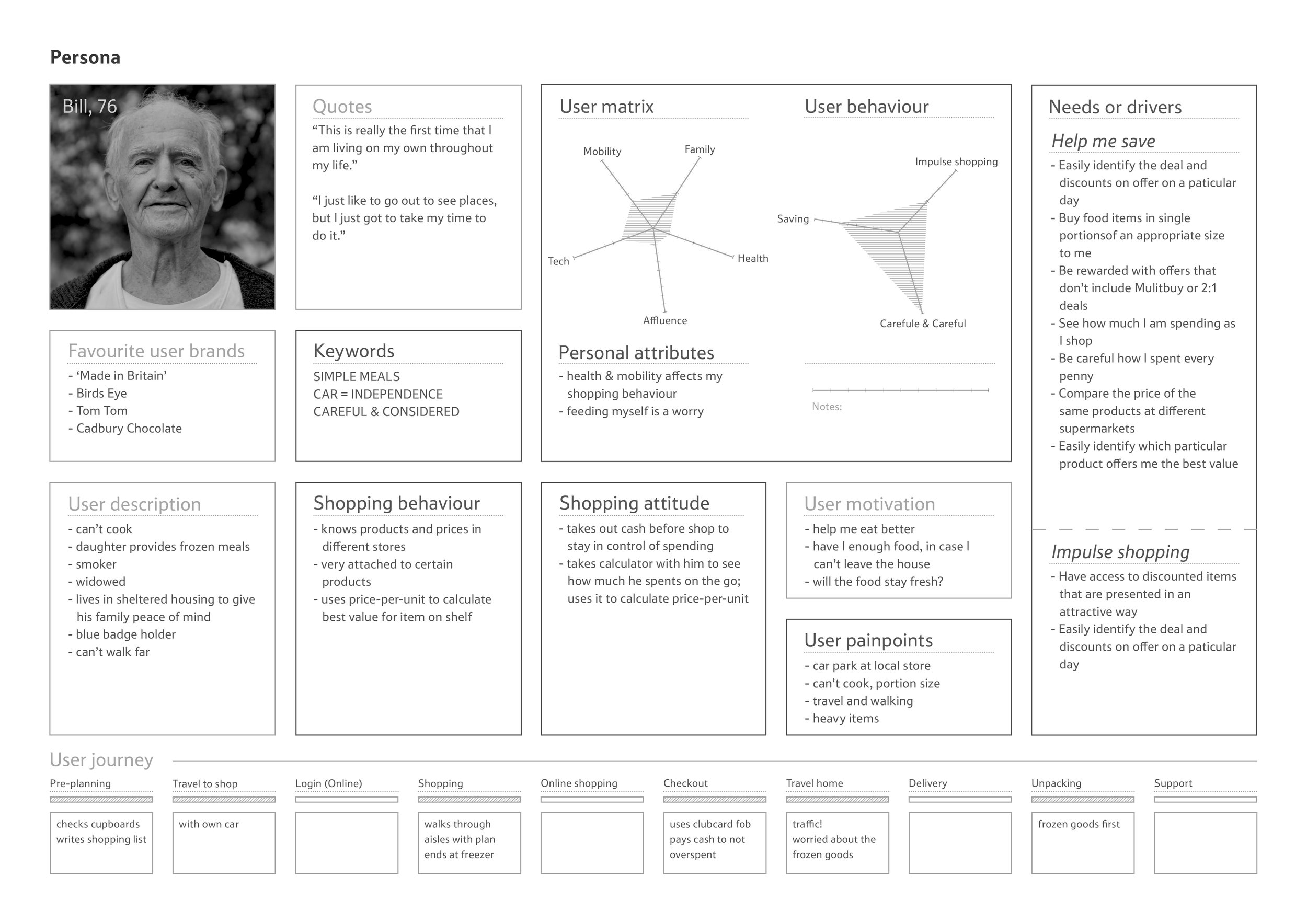
Detailed Persona