Redefining
Candidate Experience
Global financial institution ·
Hiring transformation
Creating a shared system that enabled cross-functional teams to align, decide, and improve hiring at scale.
Context and role
Design Lead driving cross-functional alignment across HR, Legal, and Product to transform hiring workflows.
Led cross-functional alignment across HR, Legal, and Product
Defined the overall approach, establishing the service blueprint as the central alignment tool
Synthesised research (45 interviews + 952 survey responses) to uncover system-level patterns
Built the initial service blueprint and defined its structure as a shared artefact
Contributed to strategic direction and final delivery, including documentation and handover

Role: Design Lead
Scope: End-to-end hiring journey
Stakeholders: HR, Legal, Product
Scale: 400,000+ applicants annually
Client anonymised due to confidentiality.
The challenge
Hiring was fragmented across teams, tools, and processes.
No shared view of the end-to-end journey
Inconsistent decision-making across departments
Limited visibility into dependencies and impact
Increasing complaints and declining candidate satisfaction
No shared map, no common language, no source of truth.
The shift
Shifted the organisation from siloed decision-making to shared understanding and coordinated action.
Instead of optimising isolated touchpoints, we made the entire system visible — enabling teams to align around a shared view and make better decisions together.
Results & Impact
Delivering measurable improvements in candidate experience, operational efficiency, and cross-functional alignment.
Based on mixed-method research across 45 in-depth interviews and 952 survey responses:
• 44% received no feedback after applying
• 63% were unclear about their application status
• 41% rated the process as frustrating or confusing
Experience improvements
Reduced candidate confusion around role expectations and next steps through clearer communication and aligned touchpoints
Reduced confusion around role expectations and next steps, improving engagement and candidate perception
Early validation showed clearer communication and reduced friction
Organisational shift
Service blueprint adopted as a shared operating model across teams
Increased alignment across HR, Legal, and Product
Research-driven decision-making expanded beyond design functions
Operational impact
Identified and reduced manual workarounds across the hiring process
Improved consistency in communication by aligning processes and clarifying ownership across teams
Identified automation opportunities by exposing inefficiencies and manual workarounds across the system
Cultural impact
Shift from siloed work to cross-functional collaboration
Non-design stakeholders began applying research and facilitation practices
Design evolved from a service to an embedded organisational capability
Insights
What made this work
Visibility creates ownership - but also resistance
Making the system visible initially created pushback, particularly from HR stakeholders concerned about exposure. Addressing this required active stakeholder management and reframing the work as a tool for shared understanding, not evaluation.
Alignment requires structure, not just workshops
Workshops helped bring stakeholders together quickly, but alignment only held through a series of sessions supported by a shared artefact. The service blueprint provided continuity and a single reference point for decision-making.
Shared artefacts enable better decisions at scale
The blueprint became a central tool to guide prioritisation, clarify dependencies, and support consistent decision-making across teams.
What I learned leading this
Resistance signals misaligned incentives. It is rarely about simple disagreement.
Early pushback revealed underlying concerns about visibility and accountability. Addressing these directly was critical to progress.
Leadership meant enabling clarity rather than pushing solutions.
The role shifted from designing outputs to creating the conditions for better decisions across teams.
Systems thinking prevented duplication and unlocked collaboration.
Mapping ongoing initiatives into the blueprint helped avoid duplicate work and created new partnerships across the organisation.
How we got here
Key decisions
We made deliberate trade-offs to prioritise clarity, trust, and alignment over speed.
Stopped a chatbot initiative that optimised a single touchpoint but reinforced fragmentation
Delayed launch by three months to resolve structural issues instead of shipping partial improvements
Removed an initial mobile-first focus to prioritise understanding of the full system
Focused on shared artefacts rather than isolated deliverables
Artefacts
Mapped the current-state system across the full hiring journey
Facilitated cross-functional workshops to align stakeholders
Developed a shared service blueprint as a central artefact
Used artefacts to guide decision-making and prioritisation
These artefacts were not deliverables — they were alignment tools used across teams.
Approach
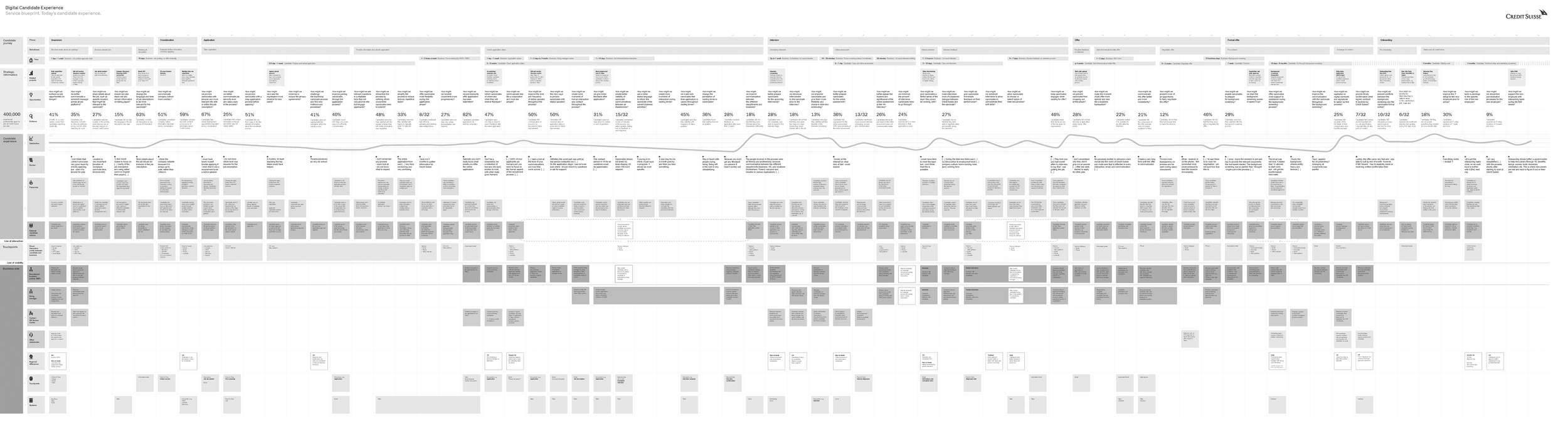
Service blueprint mapping the full hiring journey
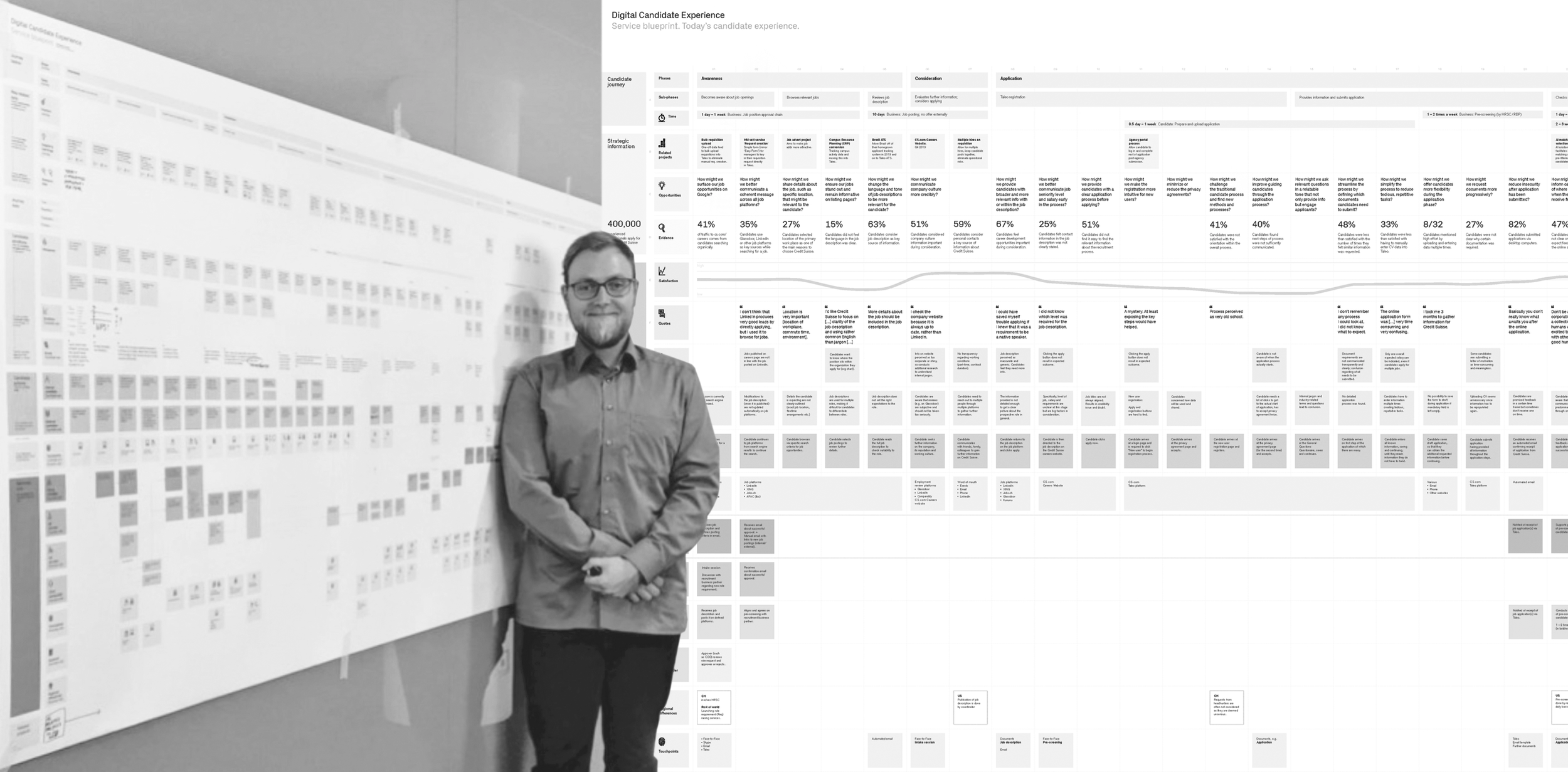
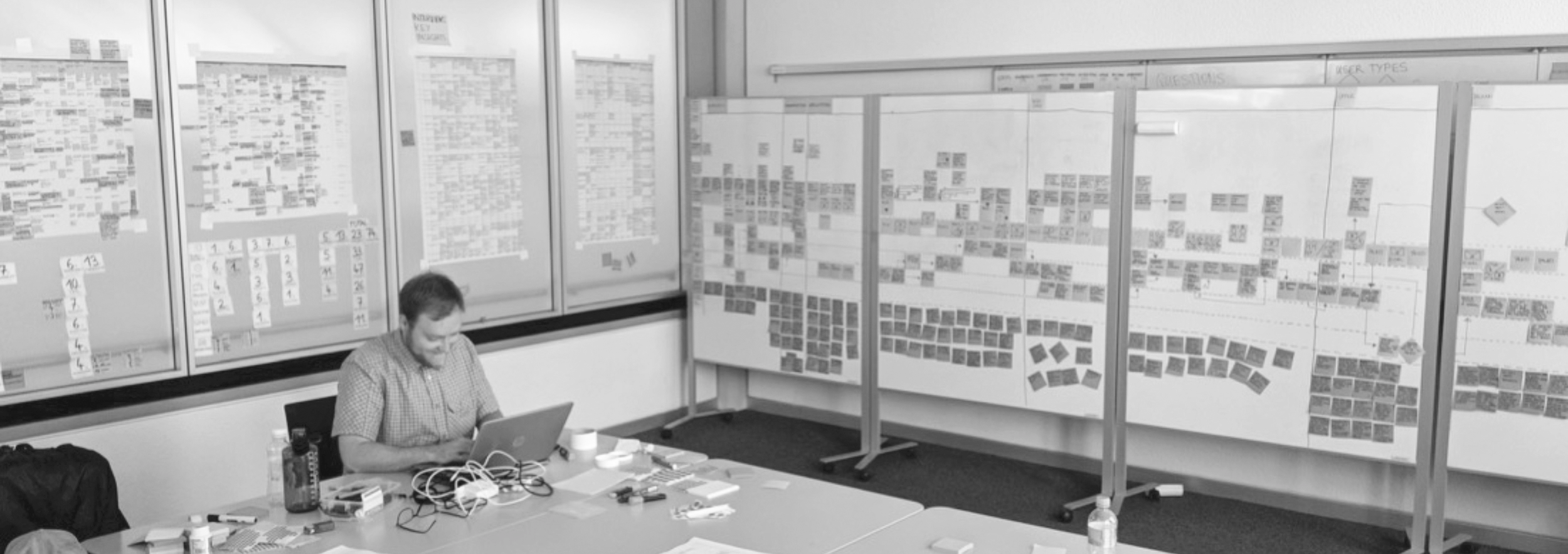
War room setup to visualise and synthesise insights
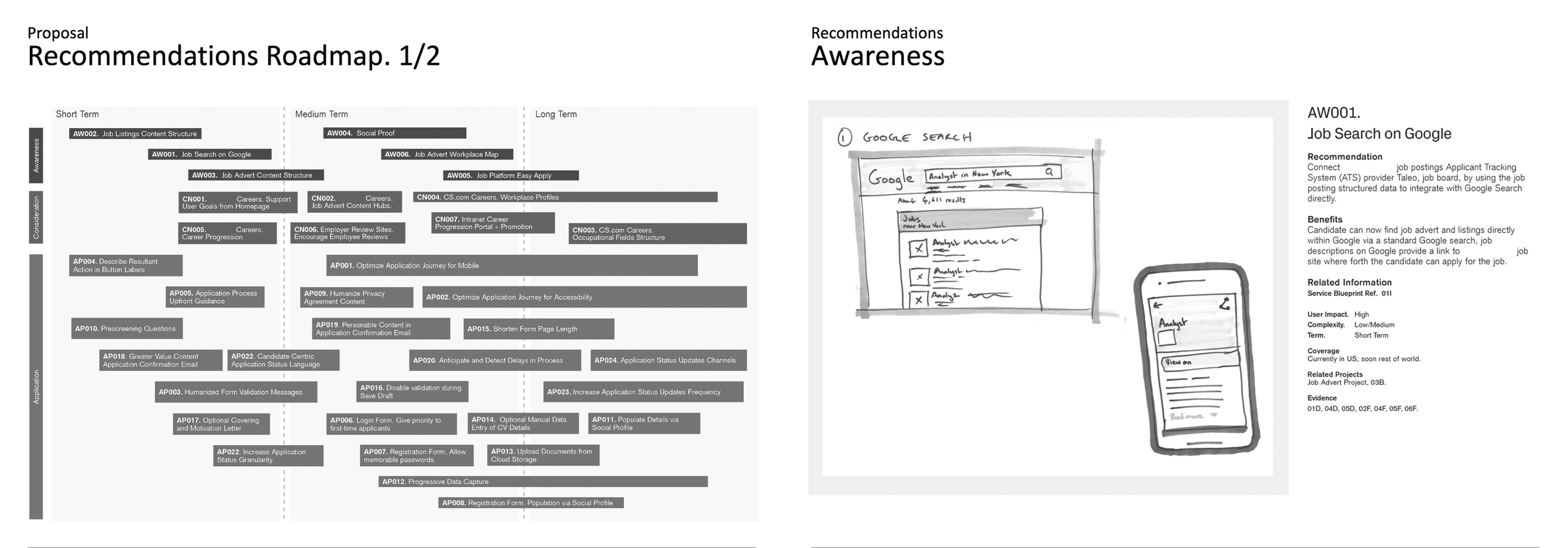
Roadmap aligning initiatives and priorities
Workshop outputs supporting shared understanding
Selected artefacts
A selection of artefacts used to make the system visible and support alignment across teams.
Service blueprint — shared source of truth
Integrated applicant and company journeys, touchpoints, pain points, research insights, and ongoing initiatives into a holistic system view.
Roadmap — from insight to action
Translated research insights into 50+ initiatives across time horizons, aligned to impact, feasibility, and organisational priorities.
War room — synthesising and communicating insights
Used to consolidate research findings, identify patterns, and maintain a shared understanding across the project team.
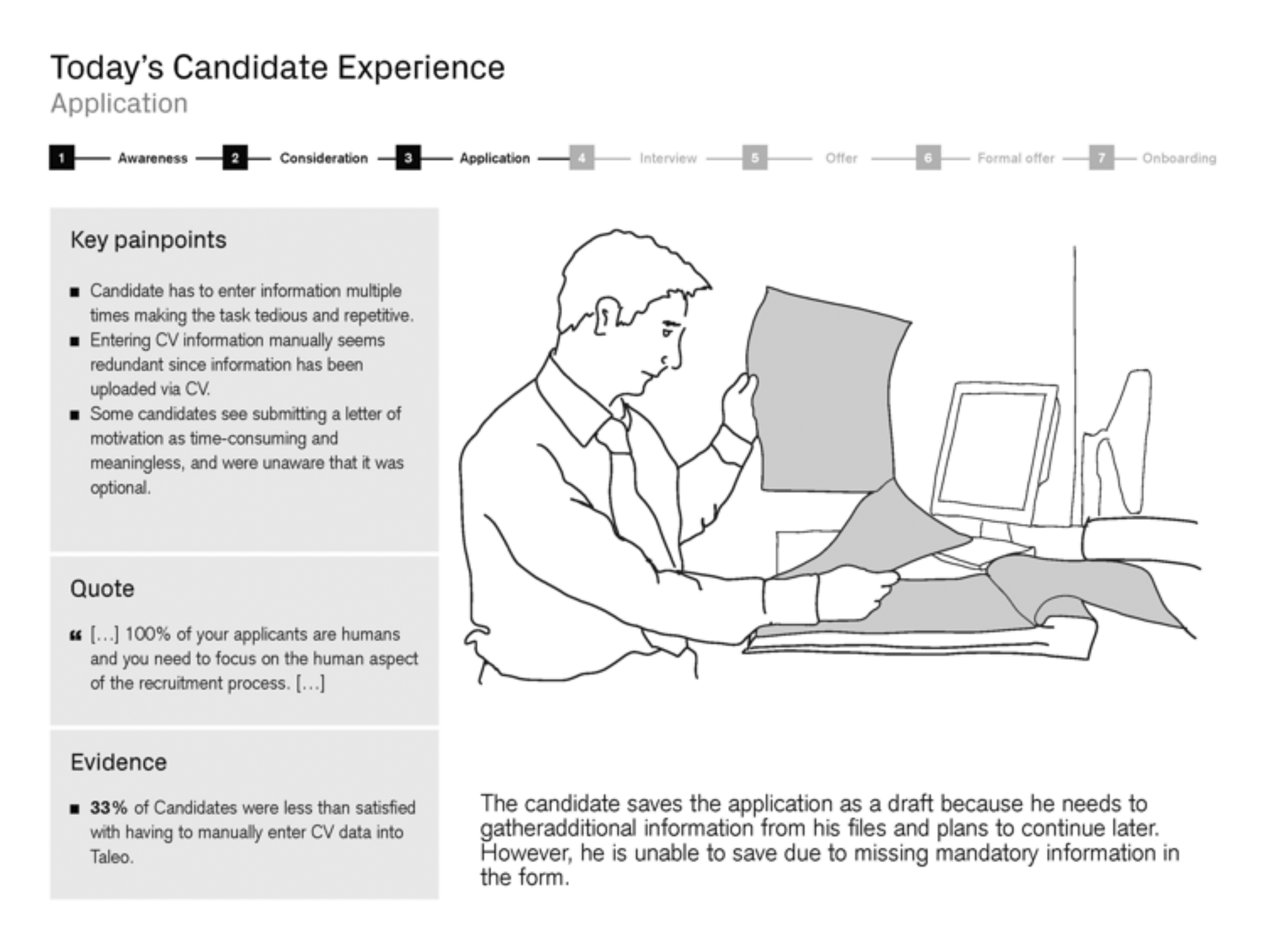
Journey storyboards — current and future experience
The as-is scenario reflected real pain points from research, while the to-be scenario translated competitor insights into an improved experience.
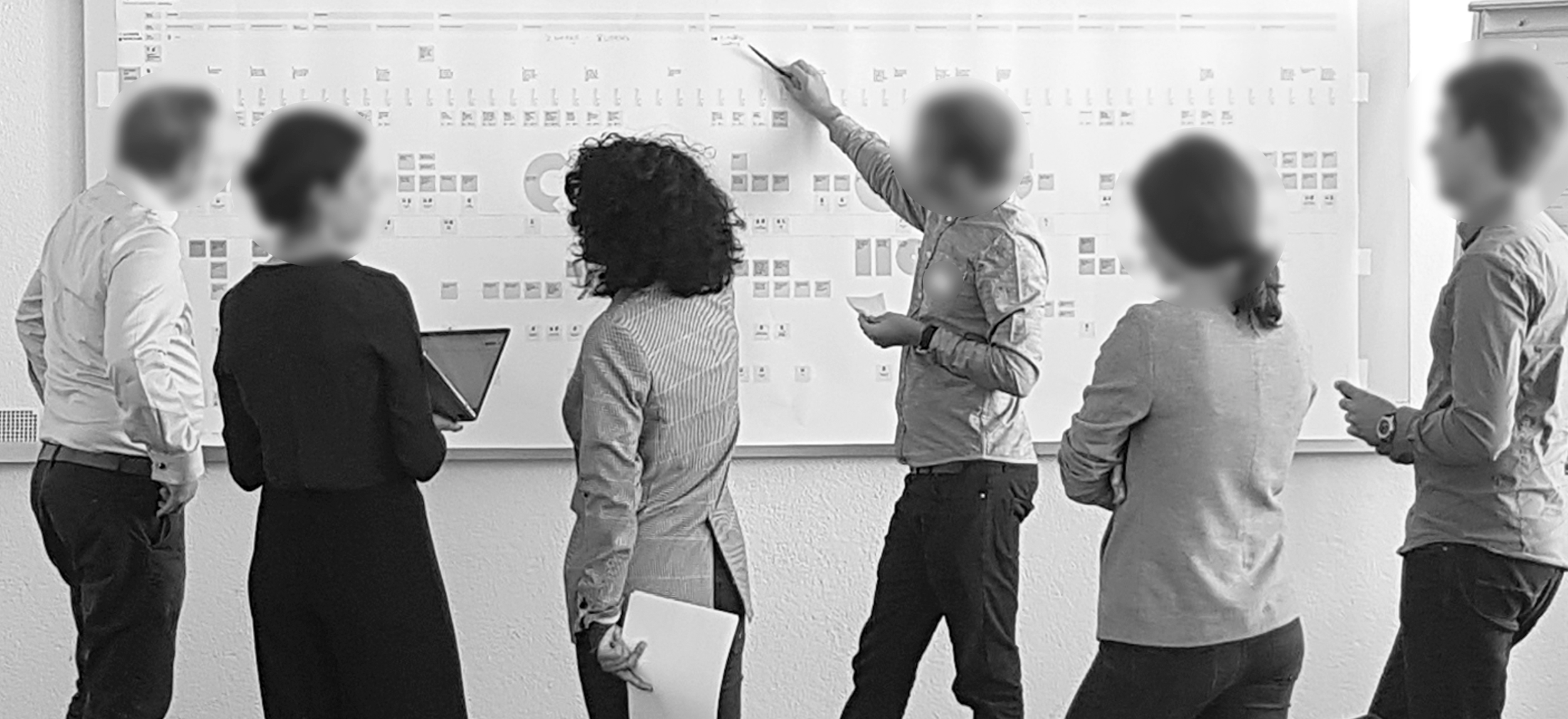
Co-creation space — blueprint as shared decision-making tool
Printed at scale, the blueprint acted as a focal point where stakeholders aligned, surfaced dependencies, and made decisions together.
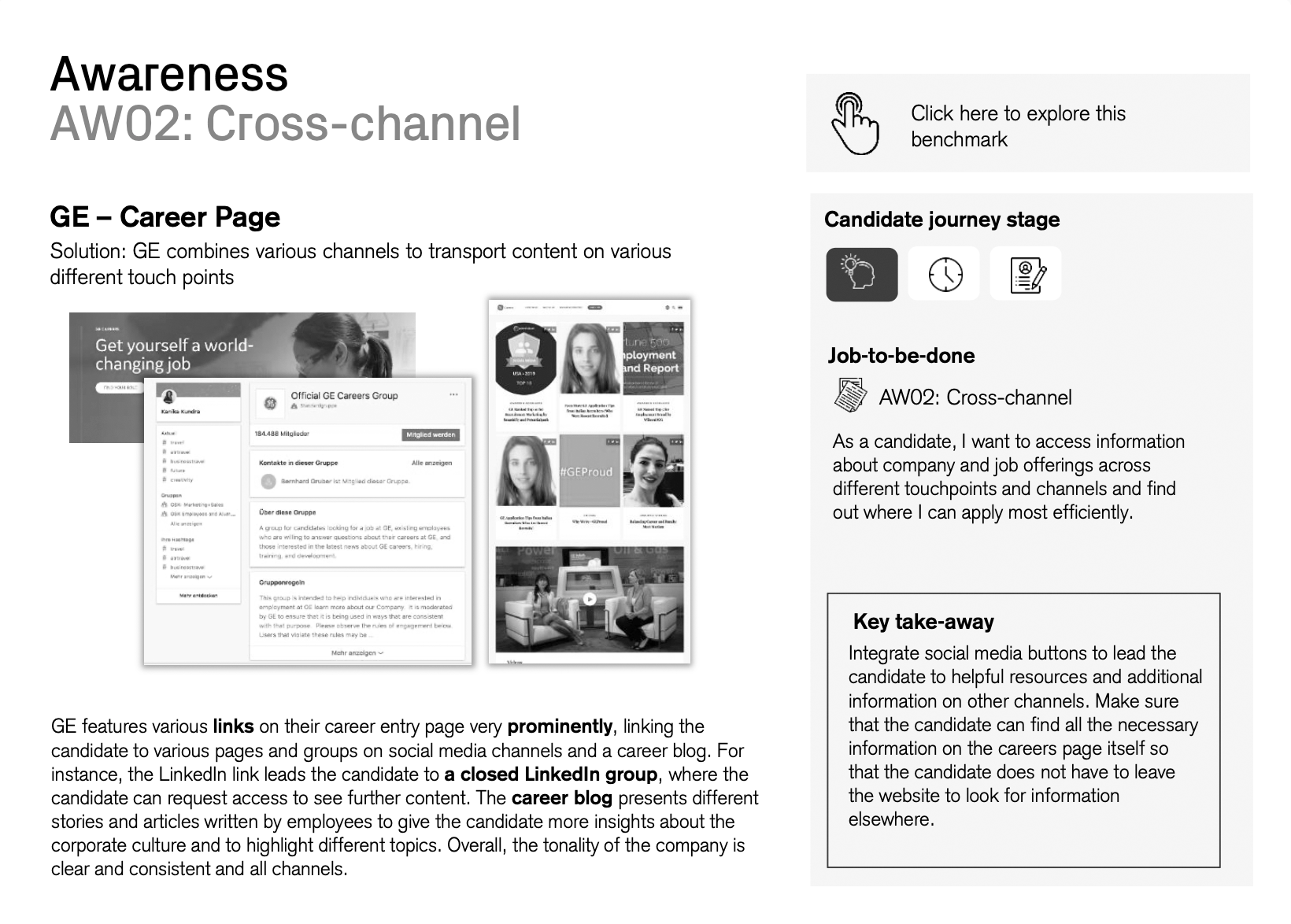
Competitor analysis — informing system-level decisions
Synthesised competitor experiences and candidate expectations to challenge internal assumptions and guide future-state design.
Facilitating change, not forcing it.
Designing with, not for.
Published case study
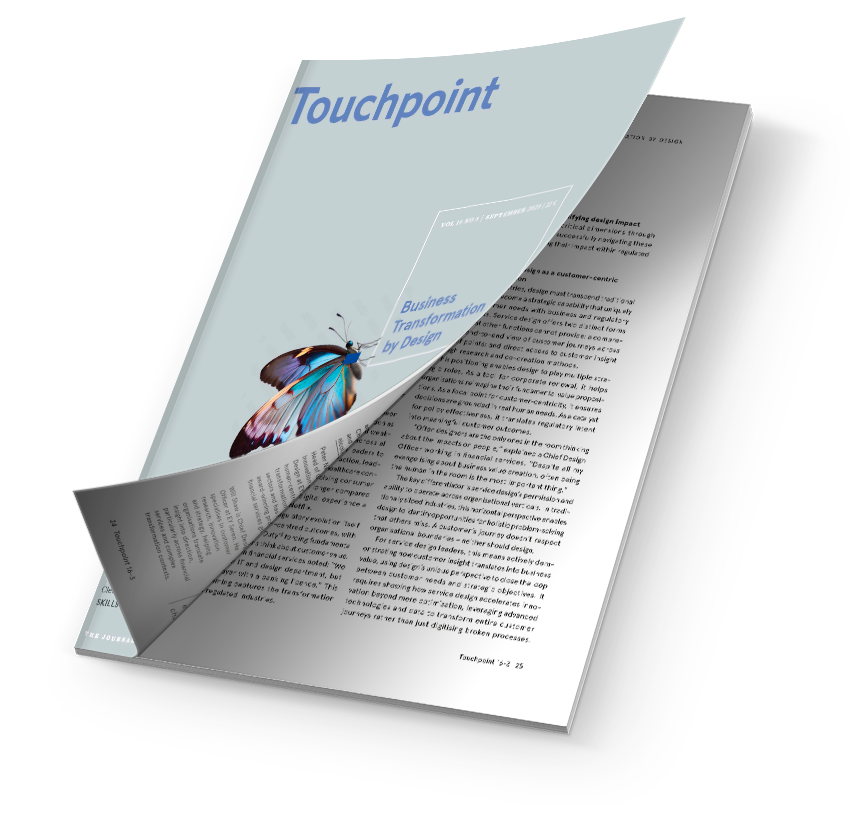
This work was published as a main article in Touchpoint Magazine (Service Design Network)
Issue 16.3 — “Business Transformation by Design”, highlighting the transformation in a six-page feature.