Designing Customer Experience Systems
Structuring fragmented touchpoints into a scalable system
Healthcare · Customer Experience · Service Design
Context and role
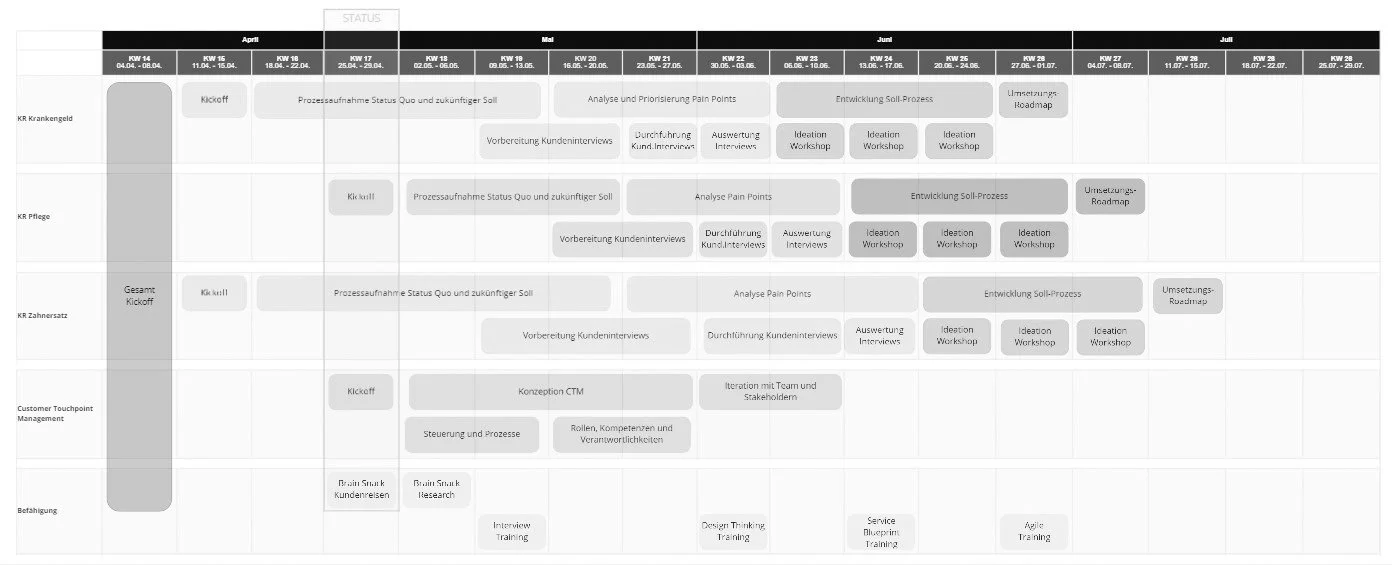
Worked as Manager (Consulting) and Lead Service Designer, part of a 3-person core delivery team on a €848K, 16-week transformation for a leading health insurer.
Led two of the 4 key streams
Customer Touchpoint Management
Capability Building

Scope
3 redesigned customer journeys
8 BrainSnack training sessions
6 stakeholder workshops
Competitor analysis (4 insurers)
2 call centre observation visits
Organisation-wide CTM framework
The challenge
The organisation faced increasing complexity across customer interactions and internal structures.
Customer journeys were fragmented across teams and channels
Limited visibility into how touchpoints connected across the experience
Data existed, but was not integrated into decision-making
Improvements were made locally, without system-level alignment
There was no shared model for understanding, managing, or improving the customer experience.
The shift
Shifted from isolated journey improvements to a system-level approach to customer experience.
Instead of optimising individual touchpoints, the work introduced a Customer Touchpoint Management system to:
Make interactions visible across journeys
Define ownership and governance
Connect insights to decision-making
Enable coordinated improvements across teams
This moved the organisation from fragmented efforts to structured, scalable experience management.
Results & Impact
From fragmented customer interactions to a structured, organisation-wide system for managing and improving experience across touchpoints.
Redesigned 3 key customer journeys, improving clarity and consistency across interactions
Established a Customer Touchpoint Management framework adopted organisation-wide
Enabled structured prioritisation of initiatives based on impact and feasibility
Built internal capability through training and collaboration
Increased alignment across business, operations, and delivery teams
Building on an already strong service foundation, the work shifted the organisation from operational excellence to a more differentiated, system-driven customer experience approach.
From exploration to system design
Moved from fragmented insights to a structured system for managing customer experience.
Initial work surfaced disconnected journeys and inconsistent touchpoints
Research identified key pain points and opportunities
Insights were translated into a coherent system model (CTM)
The focus shifted from understanding journeys to enabling continuous management of them.
How decisions were made
Decisions were grounded in both customer perspective and organisational realities, ensuring initiatives were not only desirable but actionable within the system.
Rather than evaluating isolated initiatives, journeys were assessed based on:
Strategic relevance — alignment with organisational priorities and target segments
Customer interaction volume — potential reach and impact across the member base
Pain points and unmet needs — identified through research and journey analysis
Efficiency potential — opportunities to reduce process complexity and service effort
Implementation complexity — organisational and technical feasibility
This enabled a shift from isolated improvements to prioritised, journey-driven initiatives with clear impact and ownership.

What changed because of this
This shifted the organisation from fragmented improvements to coordinated, system-level decision-making.
Instead of:
Isolated initiatives without cross-journey alignment
Siloed ownership across teams and channels
Reactive, case-driven improvements
Teams aligned around:
Shared understanding of journeys and touchpoints
Clear priorities across initiatives
A system for managing and improving customer experience
Selected artefacts
A selection of artefacts used to structure complexity, support decision-making, and enable alignment across teams.
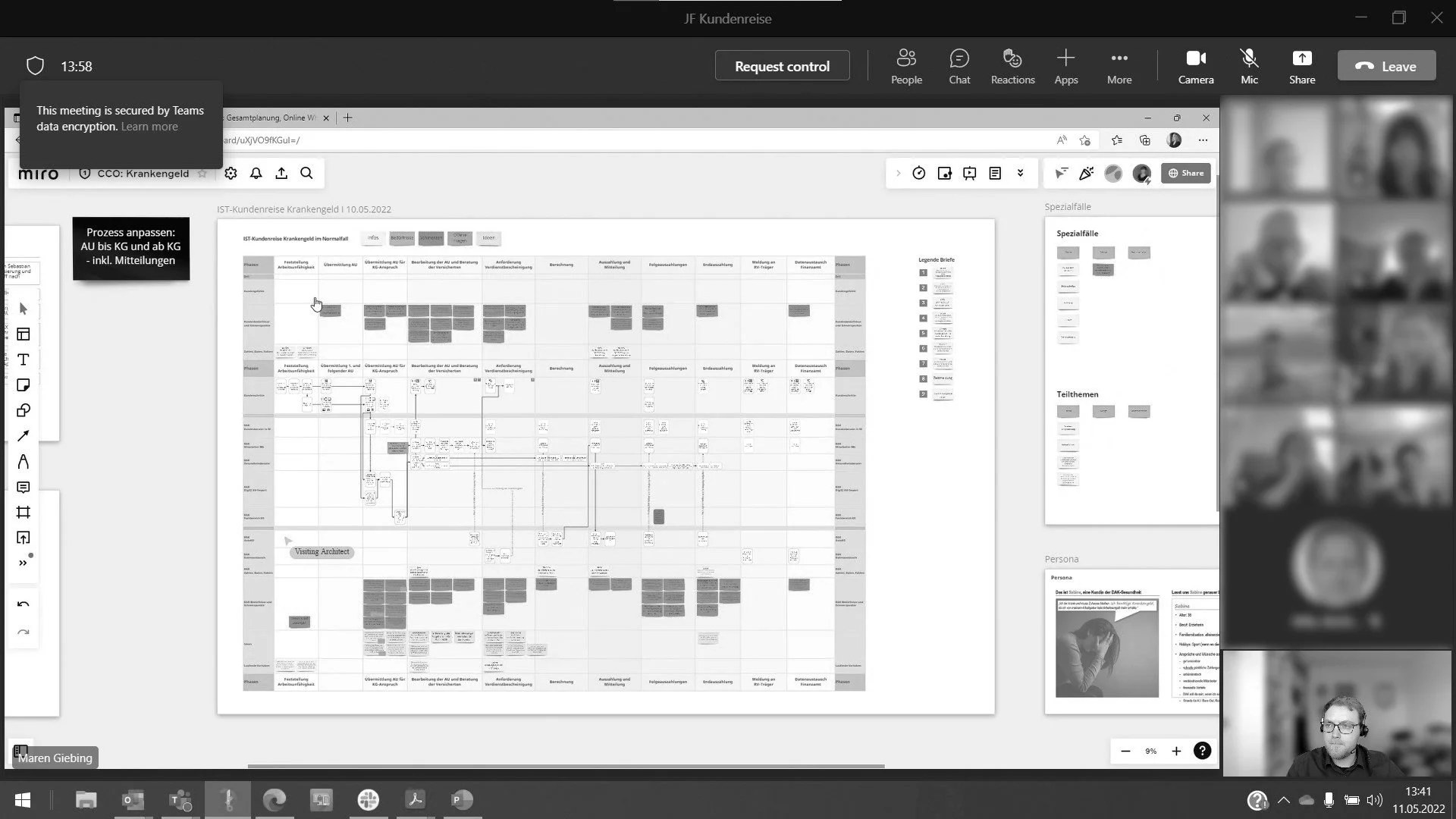
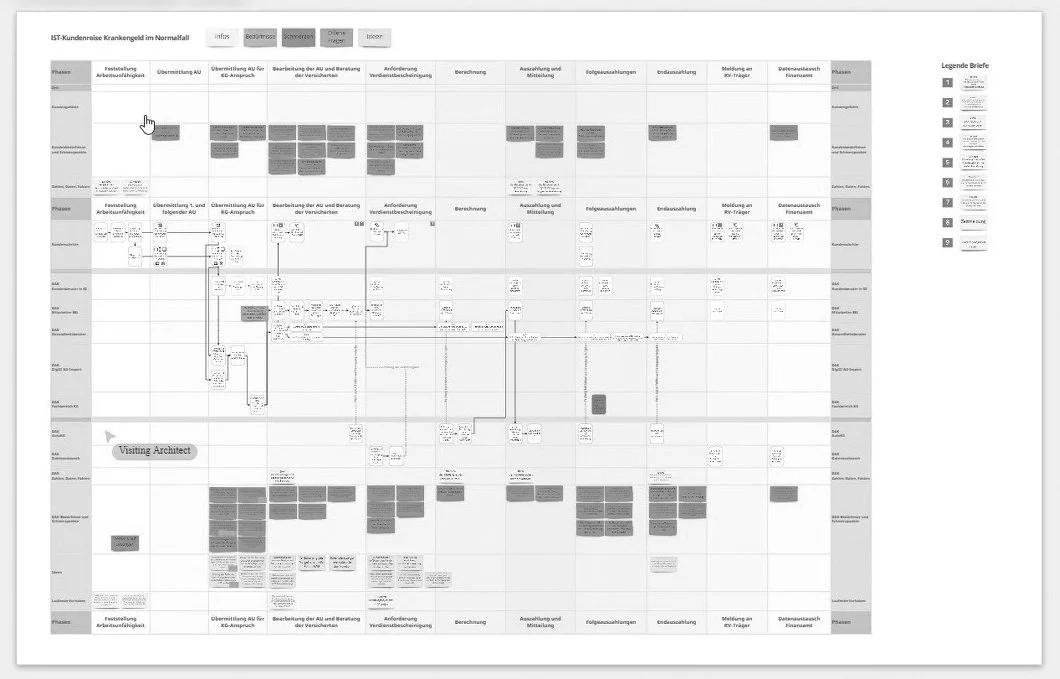
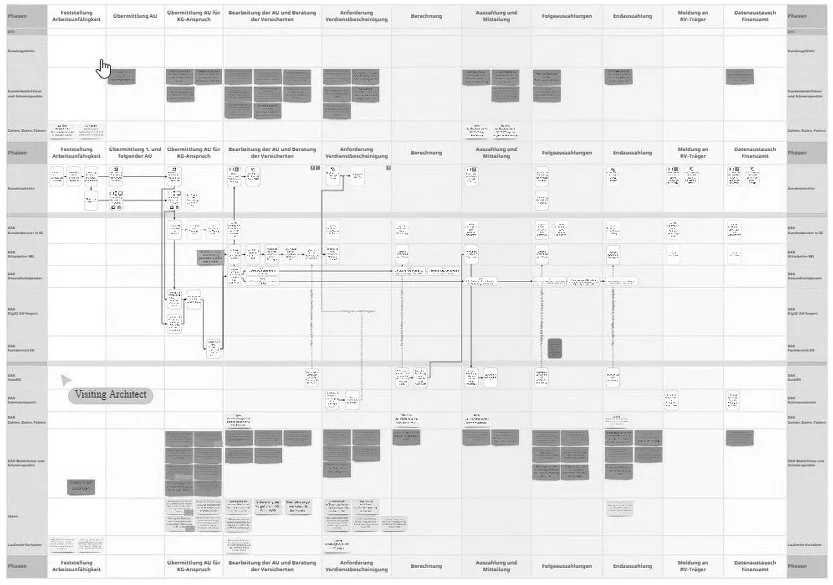
Customer journey mapping – making the system visible
Mapped end-to-end journeys across touchpoints, stakeholders, and processes, creating a shared understanding of the current state and key pain points.
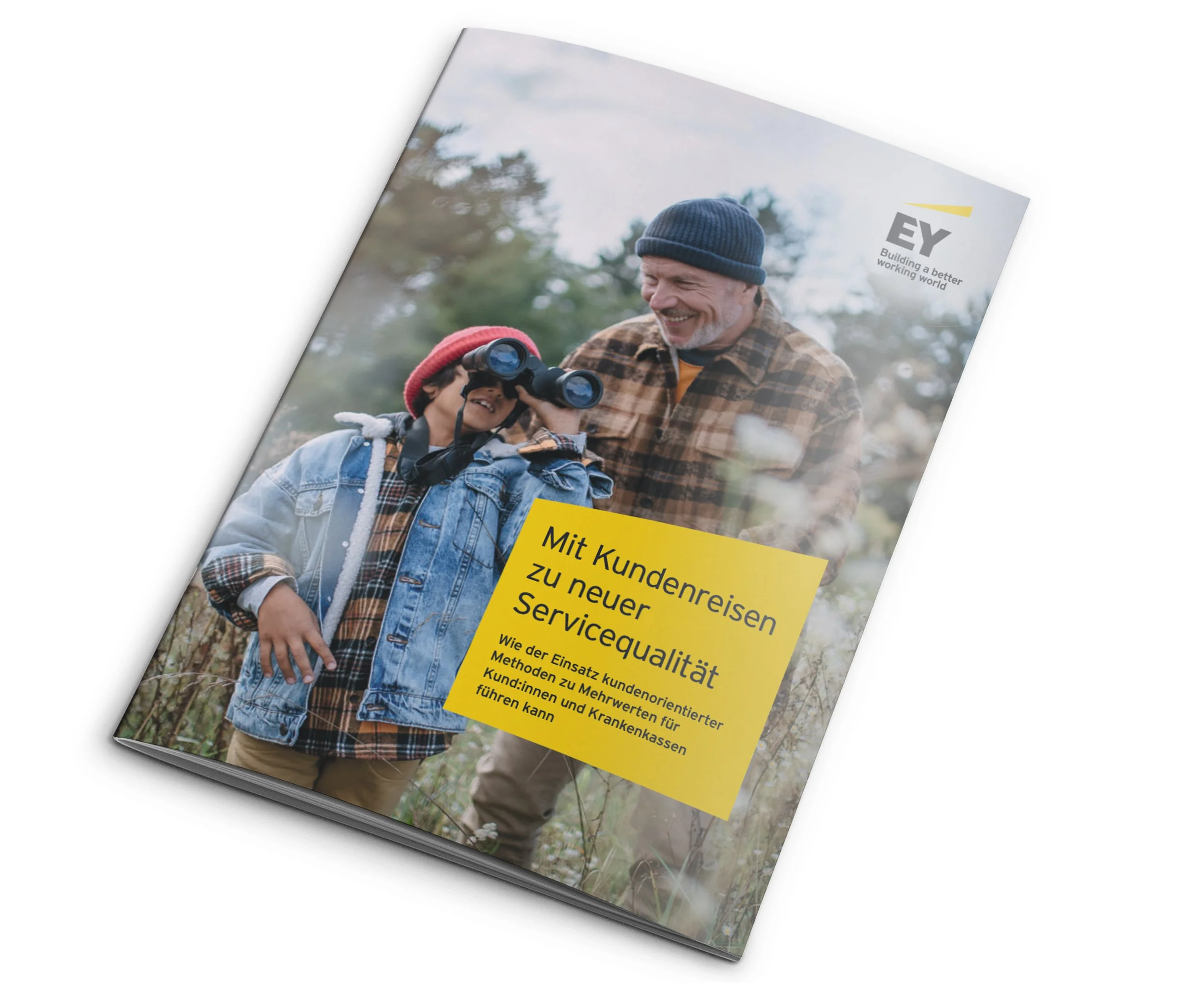
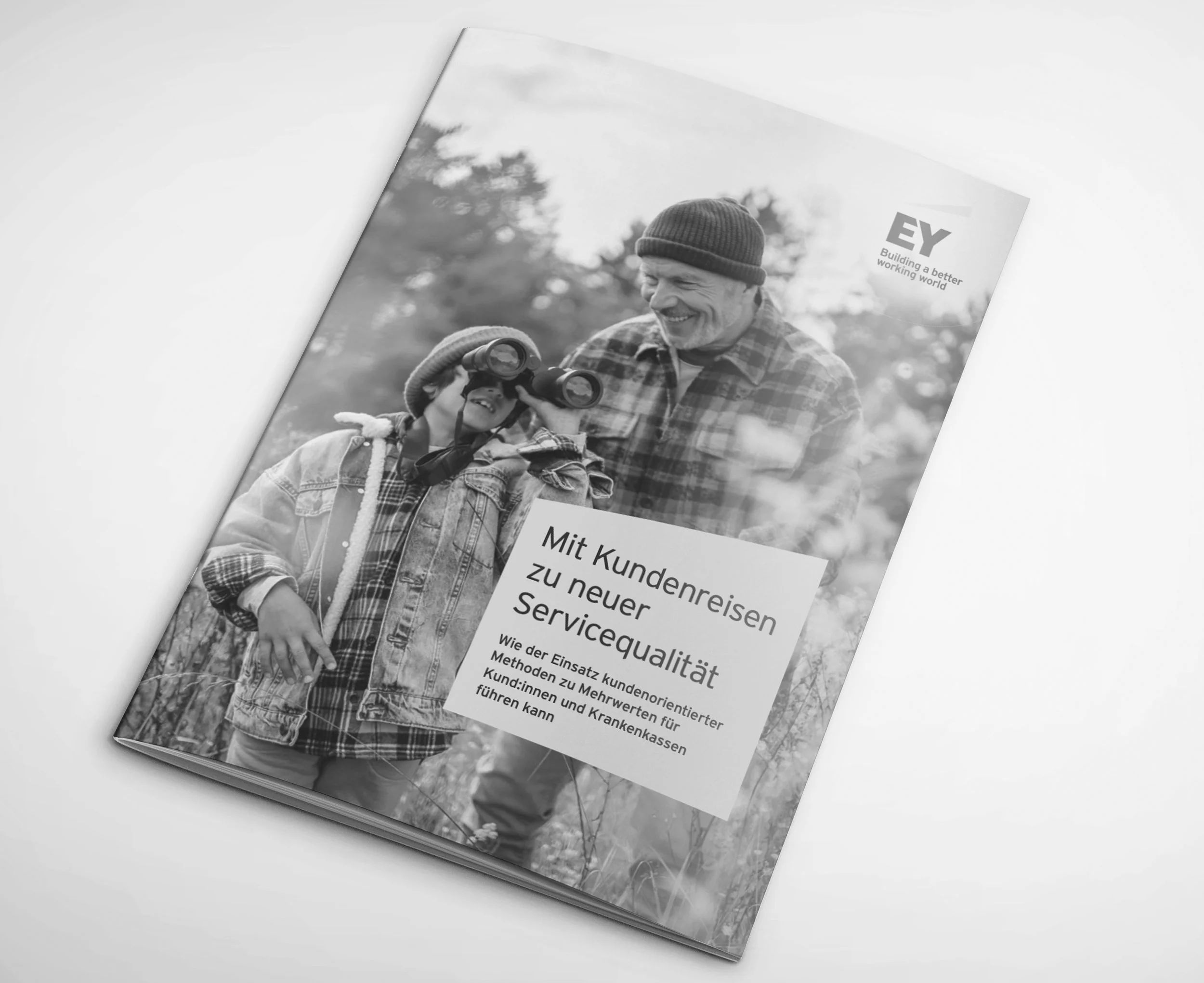
Published whitepaper – scaling insights beyond the project
Synthesised key findings and approaches into an external publication on customer journeys and service quality in healthcare.
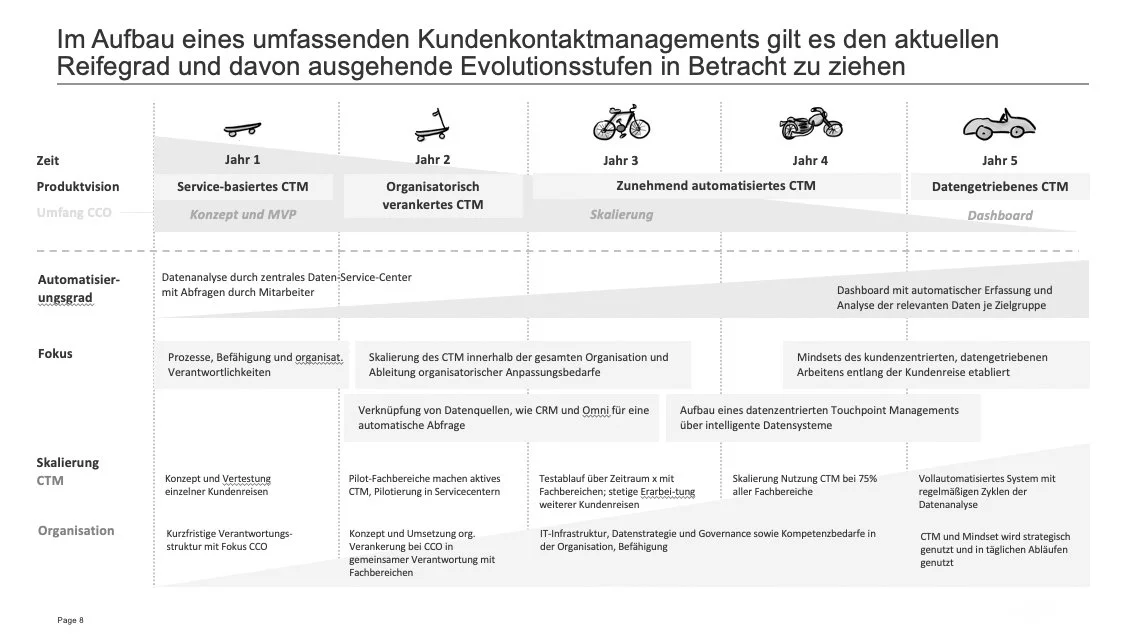
CTM framework – enabling system-level orchestration
Defined how customer interactions are structured, owned, and optimised across the organisation, providing a scalable foundation for experience management.
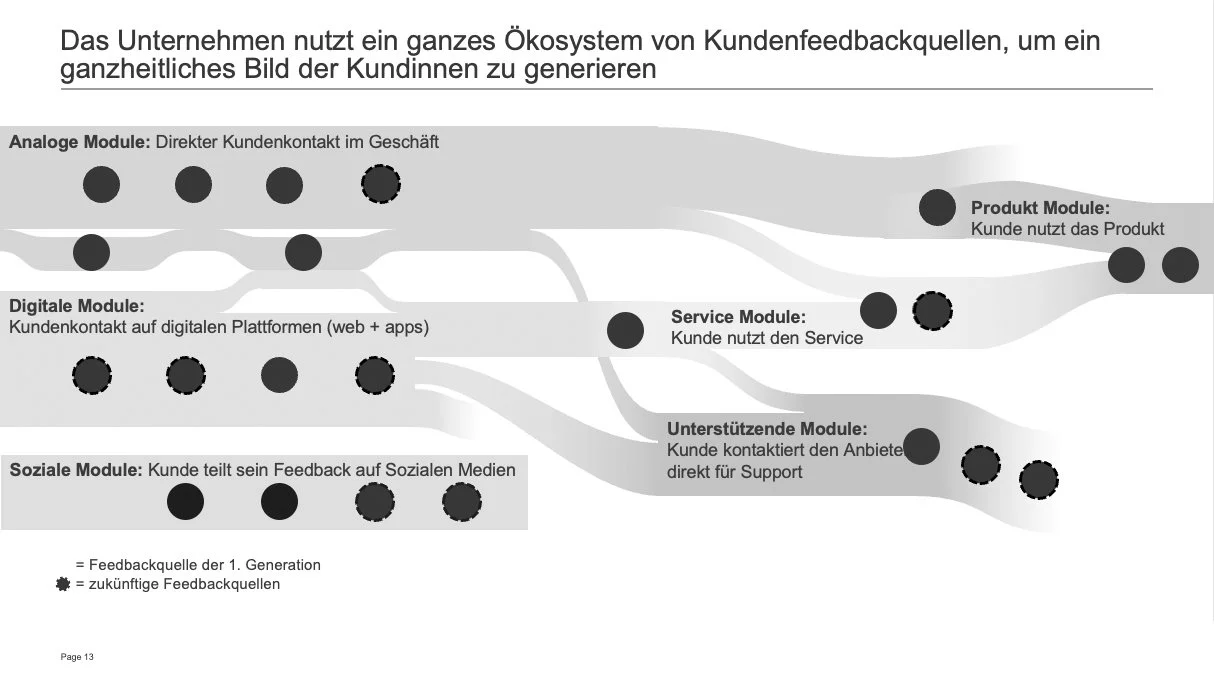
Customer feedback ecosystem – making the system visible
Mapped customer feedback sources across physical, digital, service, and support interactions, creating a holistic view of how insights are generated and used across the organisation.
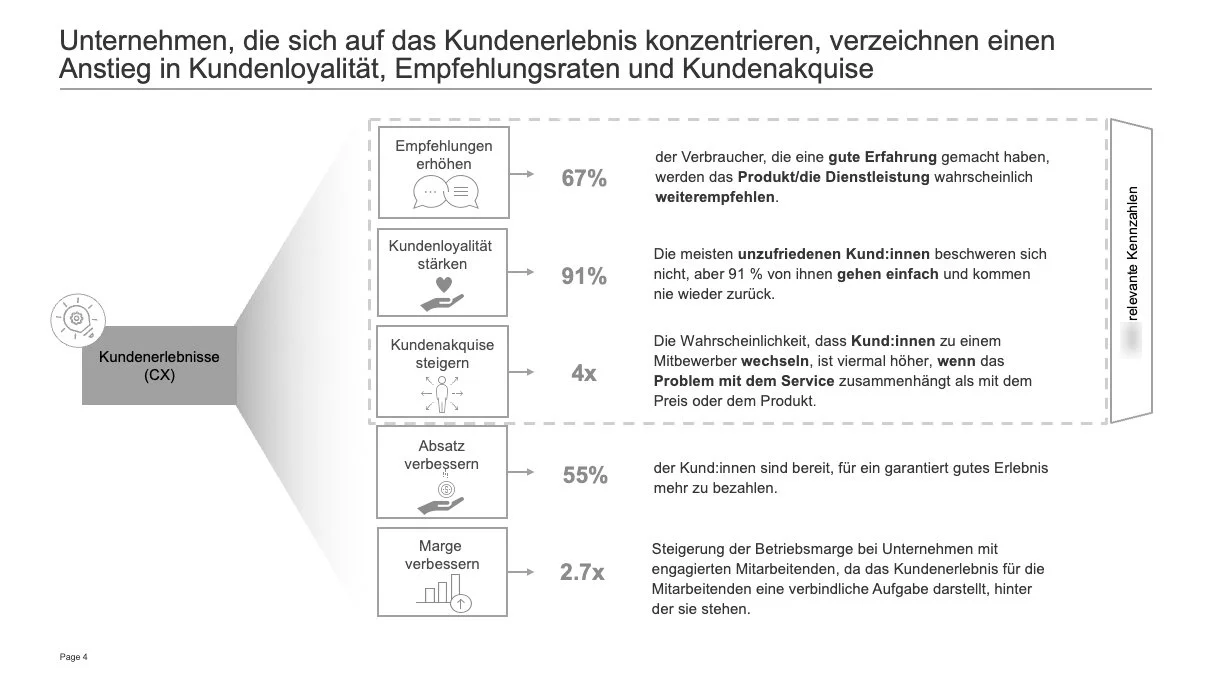
Customer experience value model – linking CX to business impact
Established a clear link between customer experience and business outcomes, showing how CX drives loyalty, recommendations, and growth.
Roadmap – from insight to execution
Translated customer journey insights and prioritised opportunities into a structured roadmap, outlining initiatives across time horizons and connecting them to business impact, implementation effort, and organisational dependencies.
My Contribution
Led both the strategic direction and hands-on execution across the project, with responsibility for shaping the Customer Touchpoint Management approach and enabling organisational capability.
Strategy & System Design
Defined the Customer Touchpoint Management (CTM) approach, structuring how customer interactions are understood, managed, and improved across the organisation
Established journey-based prioritisation and decision frameworks to guide investment and focus
Connected customer experience to business impact, aligning stakeholders around the value of a system-level approach
Research & Insight Generation
Led research across customer journeys, including call centre observations and stakeholder interviews
Conducted competitor analysis across 4 insurers to inform positioning and opportunity areas
Synthesised insights into clear problem spaces, pain points, and actionable improvement areas
Concept Development & Delivery
Designed and facilitated workshops and co-creation sessions to align teams and develop solutions
Developed journey maps, system models, and roadmaps translating insights into concrete initiatives
Ensured outputs were actionable and grounded in organisational realities
Capability Building
Designed and delivered 8 BrainSnack training sessions to build internal capability in service design and customer-centric thinking
Enabled teams to apply methods directly within their day-to-day work
Contributed to embedding a more structured and consistent approach to customer experience across the organisation
The results of this work were published in a whitepaper on customer experience and service quality in healthcare.
It translates project insights into a broader perspective on customer journeys, touchpoint management, and how organisations can move from fragmented interactions to a more integrated, system-level approach.
Publication