
Designing
Digital Revenue Streams
Industrial manufacturing company · Business model innovation & digital transformation
Designing and validating digital service offerings to unlock new revenue streams and shift from product delivery to service-based value creation.
Aligning leadership, identifying viable opportunities, and defining a clear path toward execution.
Context and role
Service Designer and Project Lead driving cross-functional alignment across business, engineering, and leadership teams to explore and validate new digital business opportunities.
Led research, synthesis, and co-creation across stakeholders
Structured the overall approach from opportunity discovery to validation
Defined decision frameworks to prioritise viable concepts
Facilitated workshops to align leadership on strategy and direction
Translated insights into actionable concepts and implementation pathways
The work combined competitor, market, and trend analysis with 24 in-depth qualitative interviews, supported by quantitative data and desk research.

Role: Service Designer · Project Lead
Scope: Business model innovation & digital services
Stakeholders: Leadership, Engineering, Business, Strategy
Scale: 12-week discovery phase
Client anonymised due to confidentiality.
The challenge
The organisation faced increasing pressure from market shifts, digital competition, and changing customer expectations.
The business was centred around product delivery, with limited visibility into how digital services could create additional value or strengthen customer relationships.
Publicly available financial data showed a decline in profits over recent years, reinforcing the need to explore new, scalable revenue streams.
There was no shared view on where to focus, which opportunities were viable, or how to move from ideas to execution.
The shift
Shifted the focus from product-centric thinking to service-based value creation.
Instead of exploring isolated ideas, the work created a structured portfolio of opportunities grounded in customer needs, business viability, and operational reality.
This enabled leadership to move from uncertainty to aligned, evidence-based decision-making.
Results & Impact
Delivering validated opportunities for service-based growth and a clear path from idea to execution.
Identified and prioritised new digital business opportunities aligned with customer needs and market shifts
Developed and validated two concepts with clear strategic and operational impact through customer testing and stakeholder alignment
Established a foundation for service-based, data-driven revenue streams beyond the existing product business
Defined implementation pathways for MVP validation, traction building, and rollout
Expanded the initial engagement from CHF 120k to over CHF 1.1m, driven by continued development and implementation of validated MVP initiatives.
Selected signals of impact
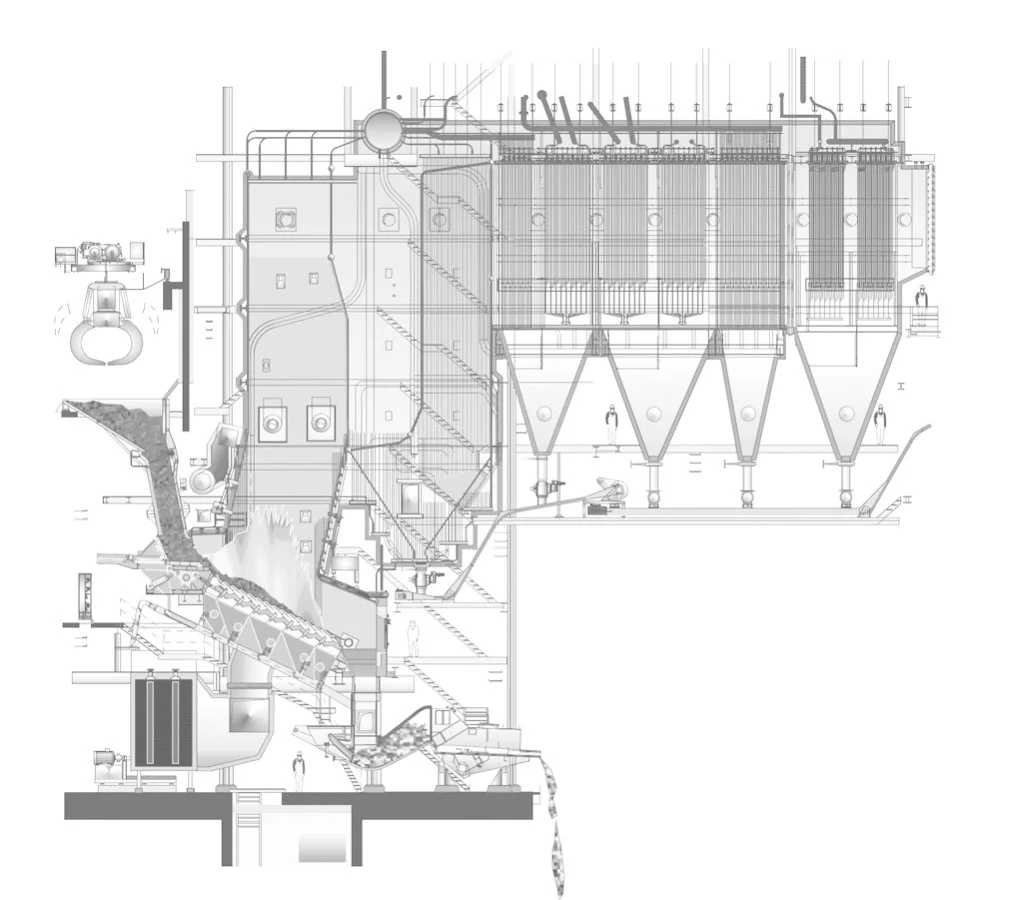
Waste stream analysis (AI-enabled service)
Identified as the strongest strategic concept through cross-analysis of market data, customer interviews, and operational insights, this service connected the company with the wider ecosystem by embedding data-driven insights directly into customer operations.
Installed at the factory level, it enabled real-time analysis of incoming waste streams, providing customers with greater visibility into composition, efficiency, and performance.
Positioned the company as a data-driven partner beyond equipment delivery
Enabled better decision-making on energy efficiency and process optimisation
Created a foundation for long-term service-based revenue streams
The concept was linked to a projected revenue potential of up to €74.7M by 2026, based on defined assumptions and a structured validation roadmap.
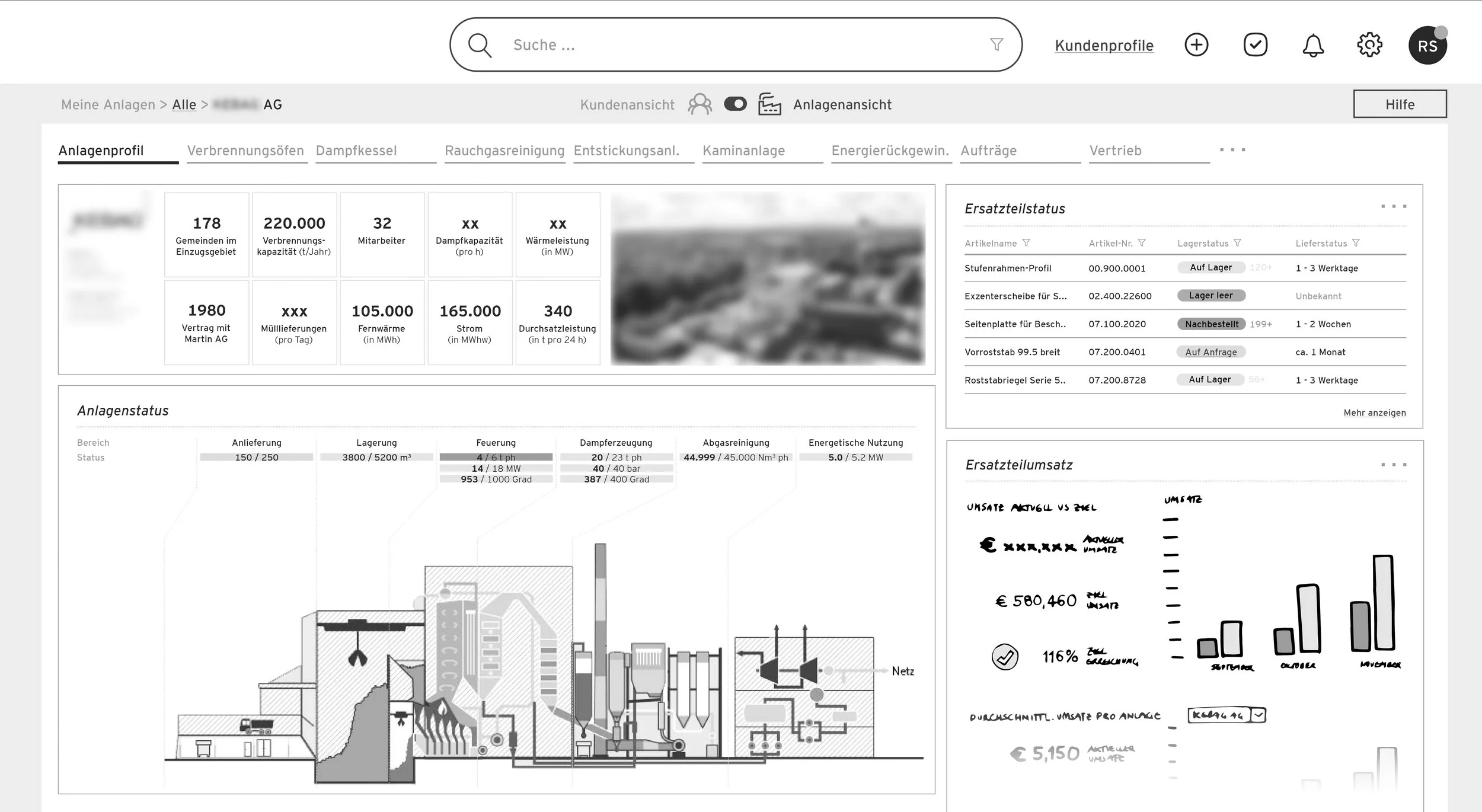
Spare parts identification platform
Addressed a critical operational dependency by replacing a manually maintained Excel-based process used for spare parts identification.
Internally, the platform improved inventory visibility, searchability, and automation — reducing manual effort, preparation time, and reliance on individual expertise.
Reduced operational risk and increased process reliability
Enabled real-time visibility of inventory and task prioritisation
Decreased preparation and shipping time through automation
Externally, it improved customer interaction by creating a direct digital interface for ordering and tracking.
Enabled real-time order tracking and clearer delivery timelines
Improved transparency and communication with customers
Created opportunities for cross-selling and service-based interactions
Turning alignment into momentum
Phase 1 milestone: alignment across leadership translated into momentum, with teams actively moving into MVP development.
Signals from the project
Leadership aligned on a clear opportunity portfolio
Teams transitioned from exploration into MVP planning
Stakeholders began actively championing validated concepts
“We’ve already turned some employees into fans.” — Internal project update, end of Phase 1
Insights
What made this work
Business pressure created the right conditions for change
Early analysis of financial data, combined with market and competitor signals, revealed a clear case for exploring new service-based revenue streams.
Grounding the work in both market signals and customer needs ensured alignment at leadership level from the outset.
Validation shifted the conversation from interest to commitment
Customer validation confirmed strong interest and willingness to engage in pilots, while also demonstrating a readiness to pay for additional services.
Making concepts tangible through early prototypes turned discussions from hypothetical into actionable.
Ideas only became valuable through clear decision criteria
Ideation created breadth, but value came from narrowing options through a consistent framework of business fit, user value, and feasibility.
This enabled confident prioritisation of concepts that were both desirable and viable to implement.
Design created the conditions for better business decisions
The role extended beyond generating outputs to enabling clarity and alignment.
By structuring information, aligning stakeholders, and making trade-offs visible, design supported leadership in deciding where to invest and how to move forward.
From exploration to validated concepts
We moved from a broad set of ideas to a small number of investable opportunities — grounded in both business reality and customer value.
Initial exploration surfaced a wide range of potential service concepts across the value chain.
But the real challenge was not generating ideas — it was identifying which ones were worth pursuing.
How we made decisions
To prioritise effectively, we applied a consistent decision framework across all concepts:
Business fit — strategic alignment and revenue potential
User value — customer relevance and adoption potential
Feasibility — technical and organisational readiness
What changed because of this
This shifted the conversation from possibilities to decisions.
Instead of debating ideas, stakeholders aligned around which opportunities could realistically create value and be implemented.
Two concepts clearly stood out
Waste stream analysis — expanding into a data-driven ecosystem play
Spare parts identification platform — solving a critical operational bottleneck while improving customer experience
We translated these concepts into tangible prototypes to test value, usability, and business viability with customers.
Through rapid iterations and co-creation, we validated key assumptions, refined the solutions, and built confidence in their real-world applicability.
Selected artefacts
A selection of artefacts used to structure complexity, support decision-making, and move from exploration to validated opportunities.
Opportunity prioritisation – focusing the portfolio
Synthesised a broad set of initial concepts into a prioritised portfolio using a feasibility vs business impact framework, enabling leadership to align on where to invest.
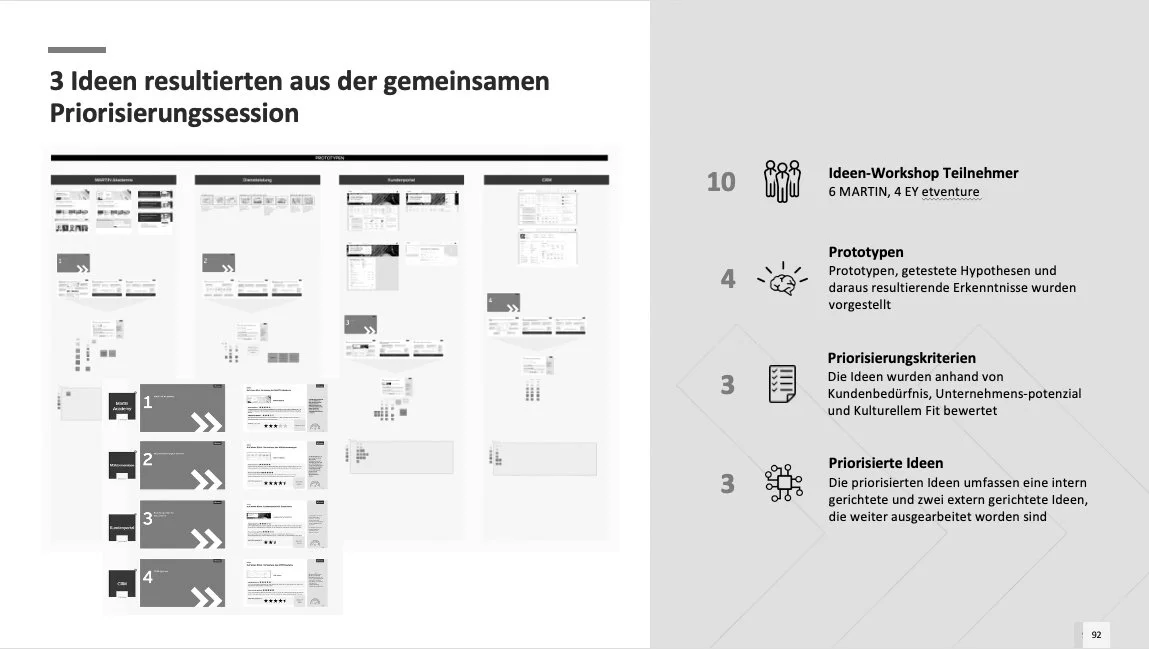
Concept prototyping – making ideas tangible
Developed low-fidelity prototypes of key concepts, translating abstract opportunities into concrete, testable solutions and revealing operational and customer value early.
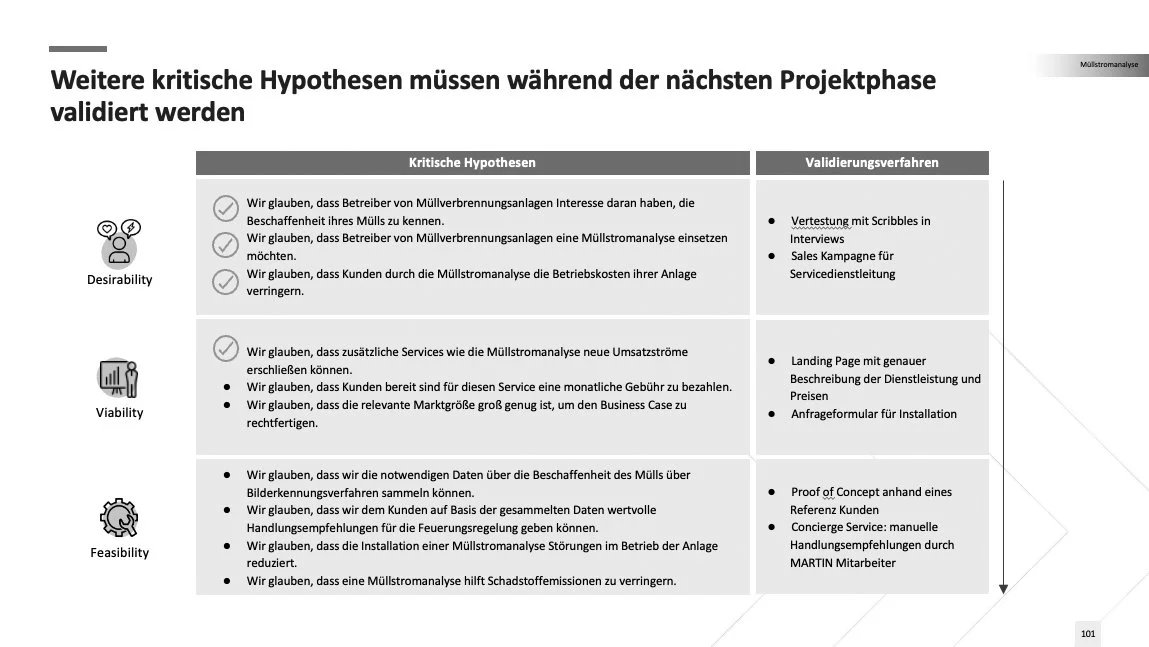
Validation framework – from assumptions to evidence
Defined clear hypotheses across desirability, feasibility, and viability, supported by structured validation methods to guide testing and reduce uncertainty.
Roadmap – from validation to execution
Defined a phased roadmap from MVP to scaling, outlining how validated concepts could be implemented, tested in-market, and grown into sustainable offerings.
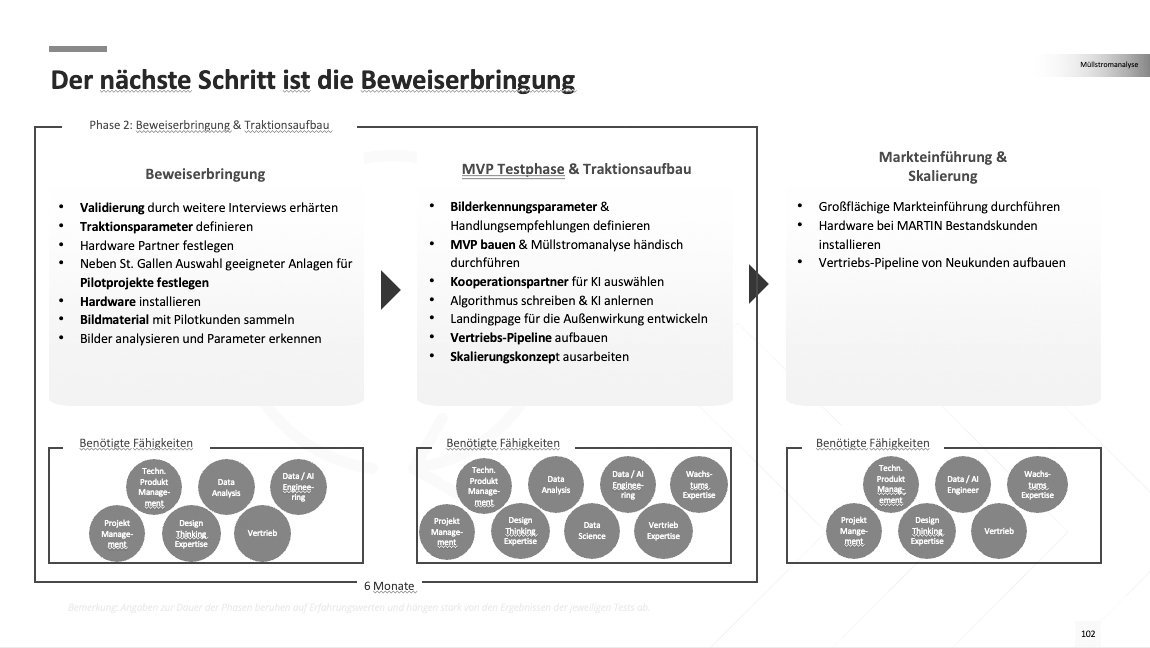
Used in leadership workshops to align investment decisions.
My Contribution
I led both the strategic direction and hands-on execution of the project — from identifying opportunity areas to developing and validating tangible solutions.
Strategy & Direction
Defined the opportunity space and facilitated stakeholder alignment across business and delivery teams
Established the decision framework used to prioritise concepts based on business fit, user value, and feasibility
Translated insights into clear strategic directions and next-step recommendations
Research & Insight Generation
Planned and conducted 24 in-depth stakeholder and customer interviews, complemented by quantitative data analysis, competitor benchmarking, and market trend research.
Analysed publicly available financial data to identify business pressure and support the case for new revenue streams
Synthesised findings into actionable insights that guided concept development
Concept Development & Prototyping
Designed and prototyped the spare parts identification platform end-to-end, translating complex workflows into a usable digital solution
Developed and iterated service concepts through rapid prototyping and co-creation sessions
Supported validation with customers, refining concepts based on real-world feedback