Facilitation
Designing collaborative environments for alignment, learning, transformation, and organisational change.
Facilitation has become a central part of my professional practice — supporting organisations through workshops, training programmes, strategic sessions, and collaborative formats that help teams navigate complexity, align stakeholders, and move ideas into action.
Across enterprise transformation, DesignOps, service design, leadership, education, and capability-building environments, I design and facilitate sessions that combine systems thinking, visual collaboration, operational insight, and practical participation.

125+
Workshops, training sessions & facilitation activities
10+
Training programmes developed and delivered
20+
Workshop and facilitation formats delivered
5+
Reusable off-the-shelf workshop formats
12+ yrs
Facilitating collaborative and strategic sessions
6+
Enterprise organisations supported through facilitation and capability building
Sessions ranged from small team workshops to enterprise-wide collaboration activities involving multidisciplinary stakeholders across banking, retail, consulting, education, and organisational transformation environments.
Philosophy
Helping people make sense of complexity together.
I have always used workshops and facilitation to help people make sense of complexity, collaborate more effectively, and connect with each other.
For me, facilitation is not about filling workshops with as many activities as possible. Strong facilitation creates clarity — helping people focus on what matters, contribute safely, and move from ambiguity towards shared understanding and practical action.
Particularly inside large organisations, workshops also become opportunities to practice collaboration itself — helping teams understand different perspectives, constraints, and ways of working across disciplines.
Approach
Over the years, my facilitation practice evolved through continuous testing, iteration, observation, and participant feedback — shaping workshop systems focused on clarity, collaboration, practical learning, and operational usability.
6 Facilitation principles
Clarity over complexity
Workshops should help people focus, not overwhelm them. I design clear structures, understandable flows, and meaningful exercises that support the overall learning journey.
Collaboration as practice
Workshops create opportunities for teams to practice collaboration itself — especially inside large organisations where cross-functional collaboration is often difficult in day-to-day work.
Learning through participation
People understand ideas better when they actively explore, test, discuss, and apply them together rather than passively consuming information.
Visual and self-explanatory systems
I design canvases, maps, and facilitation tools to be highly visual, intuitive, and self-explanatory so teams can continue using them independently beyond the session itself.
Continuous iteration
Workshop formats evolve through observation, testing, and honest participant feedback. Even engaging exercises need to support meaningful learning outcomes.
Safe spaces for exploration
Strong facilitation creates environments where people feel comfortable exploring ideas, challenging assumptions, testing concepts, and learning together without fear of failure.
Selected facilitation formats
Workshops, training systems, and collaborative learning experiences developed across enterprise environments.
Service Design Essentials
Scaling service design through structured facilitation
Designed and facilitated a scalable training and workshop model that embeds service design practices, aligns stakeholders, and supports better decision-making across teams.
Participant perspective on a hands-on service design workshop.
“What was really useful was putting ourselves into the shoes of the customer — mapping pain points, identifying opportunities, and understanding the experience from a human perspective rather than just solutionising technology. The workshop gave us practical tools and frameworks we could immediately apply within the organisation.”
— Participant
The programme combined practical training, collaborative exercises, reusable workshop systems, and measurable organisational impact.
628
Colleagues trained across the organisation
8.07 / 9
Outstanding ROI of time, rated by participants (584 resp.)
2x
Increase in service design understanding
£214k+
Potential savings vs. external training
Selected workshop exercises
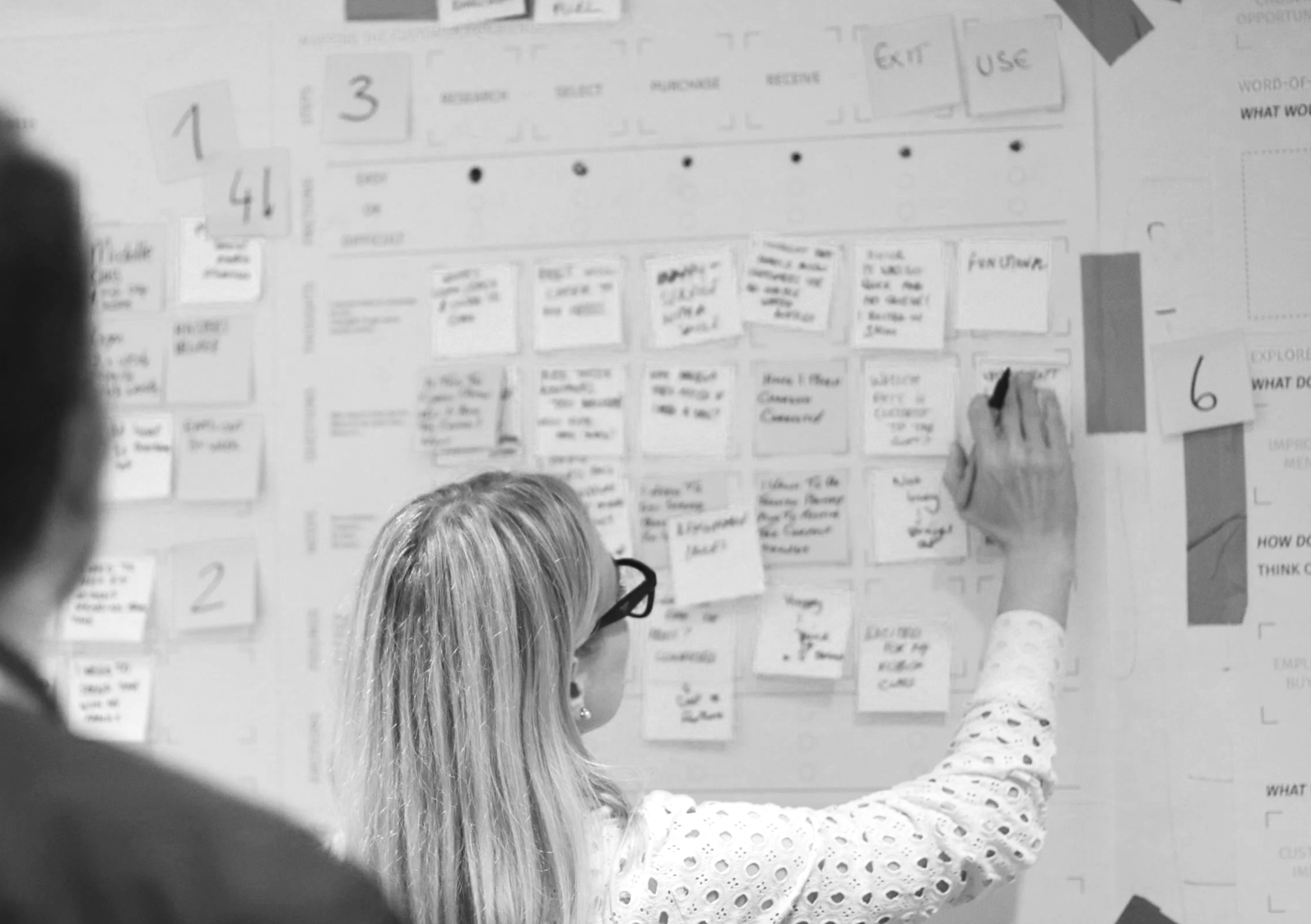
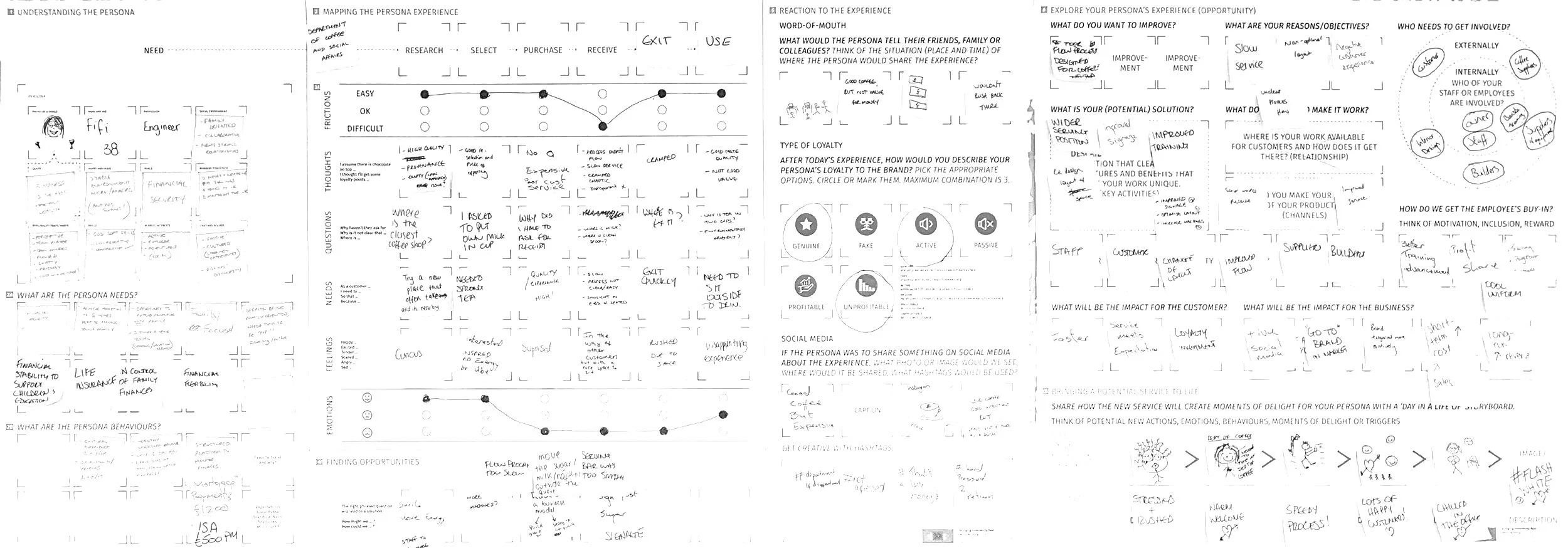
Customer Journey Mapping
Teams mapped customer experiences, emotions, pain points, and opportunities to better understand end-to-end interactions.
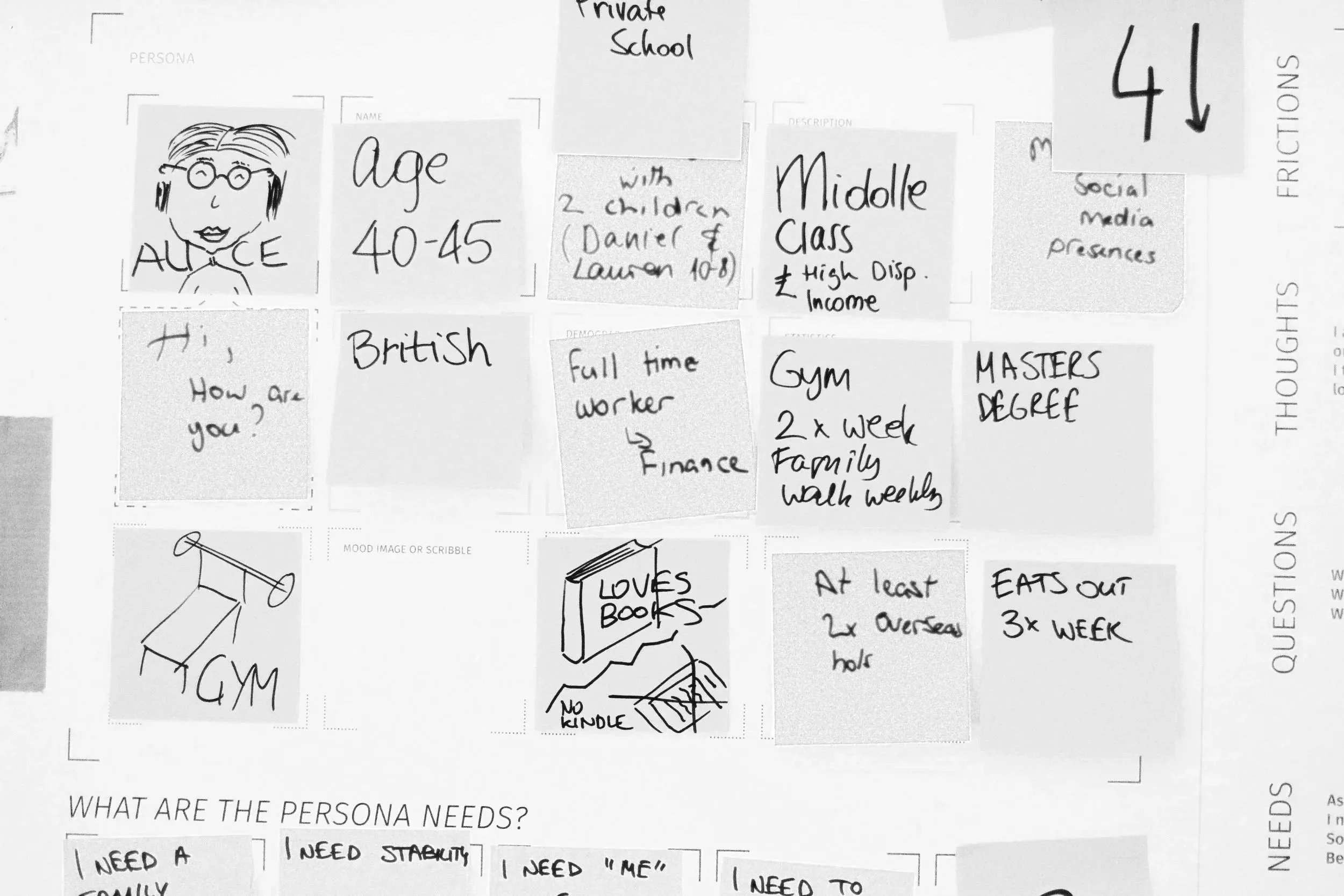
Persona Creation
Participants created personas based on behaviours, motivations, frustrations, and customer needs to support empathy and decision-making.
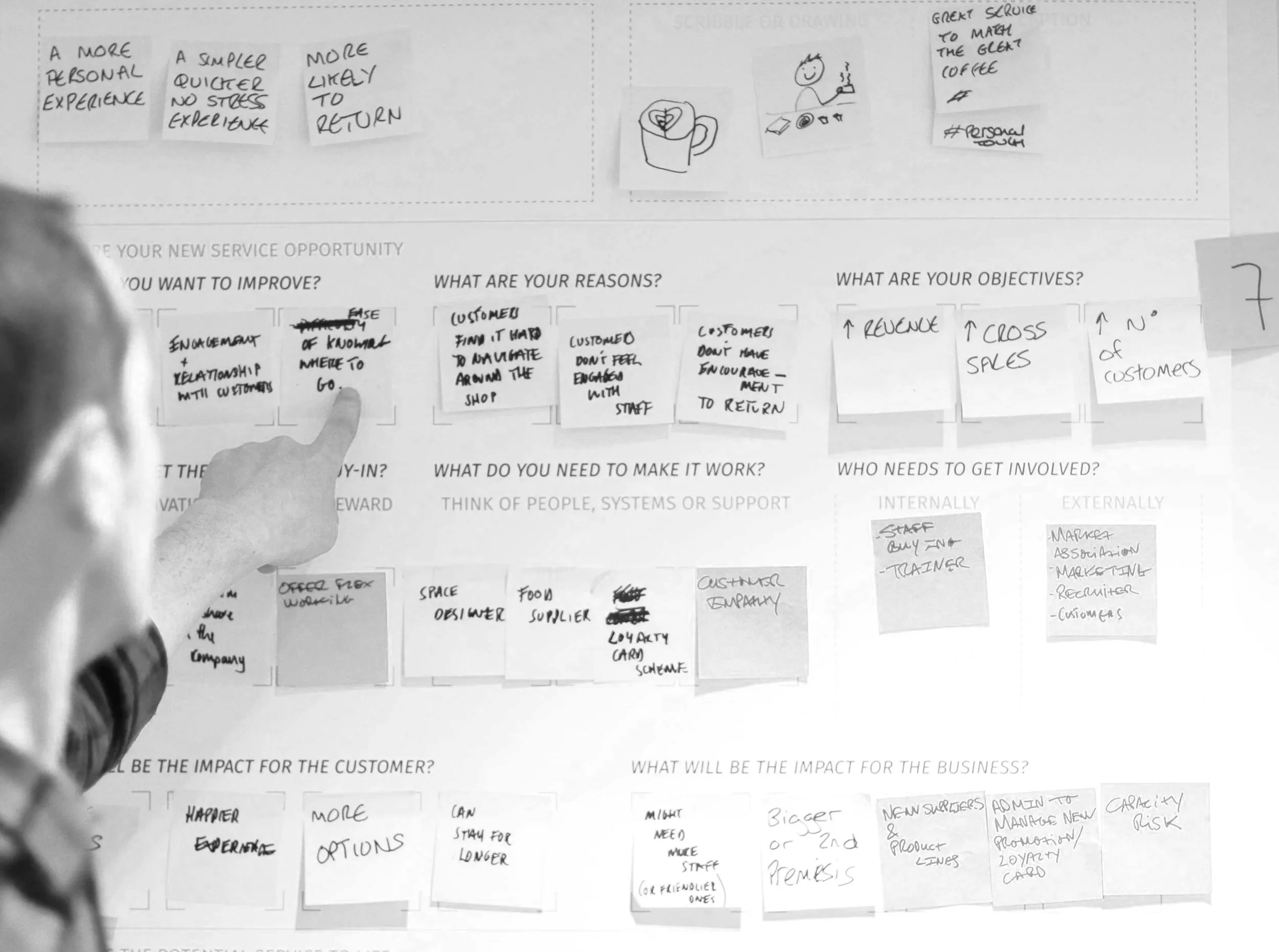
Business Model Canvas
Teams explored value propositions, customer relationships, and operational viability through structured business model exercises.
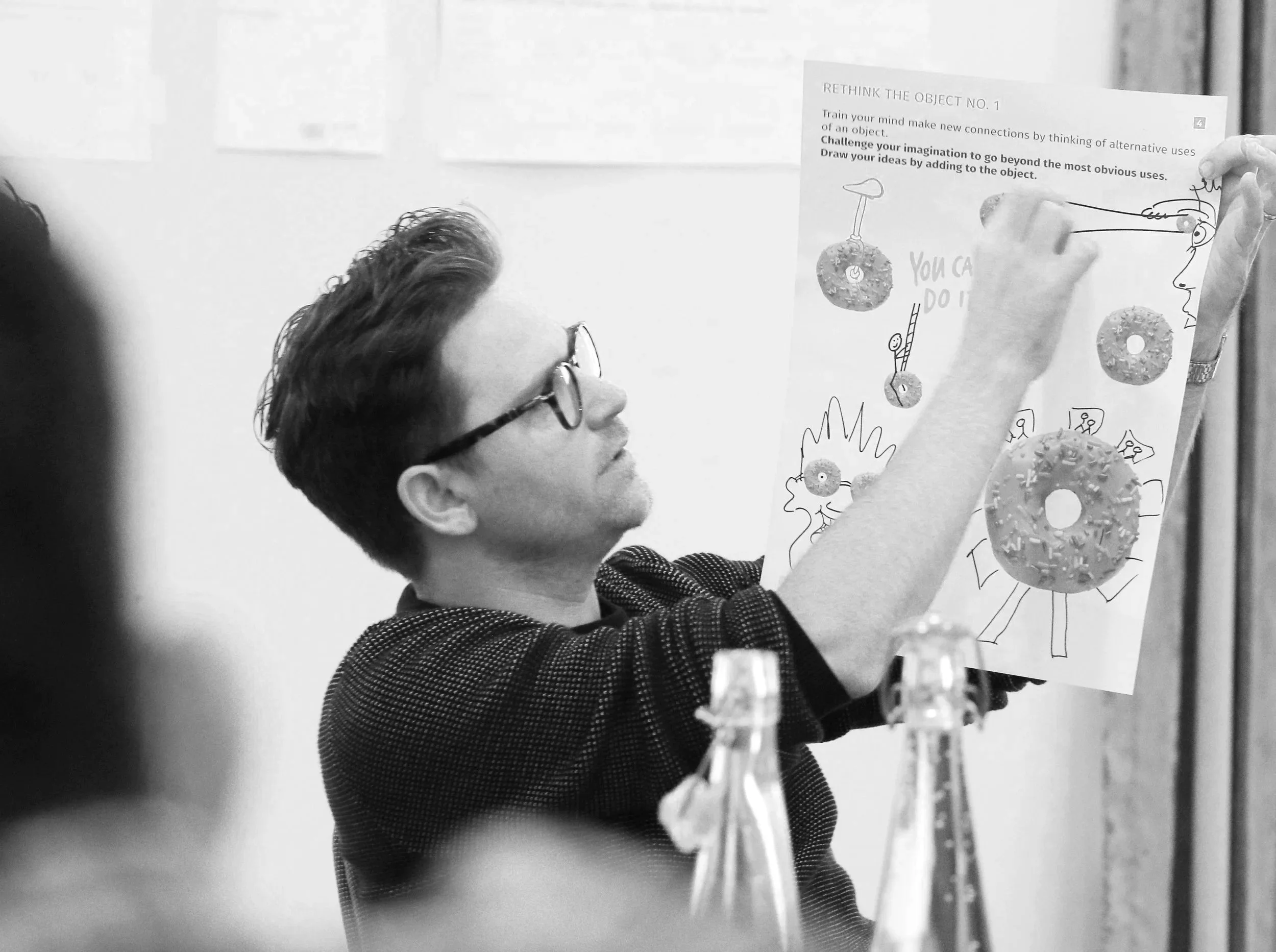
Visual Thinking
Collaborative sketching and fast scribing exercises helped teams simplify complexity and communicate ideas visually.
To get the right answer ask the right question
Problem Framing Workshop
Helping teams define clearer problem statements, align assumptions, and create actionable strategic direction before delivery begins.
Participant perspective on a hands-on problem framing workshop.
“We often try to boil the ocean, so learning how to define more specific and actionable problem statements was incredibly valuable.”
— Participant
94%
Post-workshop survey completion
+45%
Increase in confidence facilitating sessions
8.1 / 9
Overall facilitation quality
8 out of 10
Said the workshop was worth their time
Selected workshop visual insights
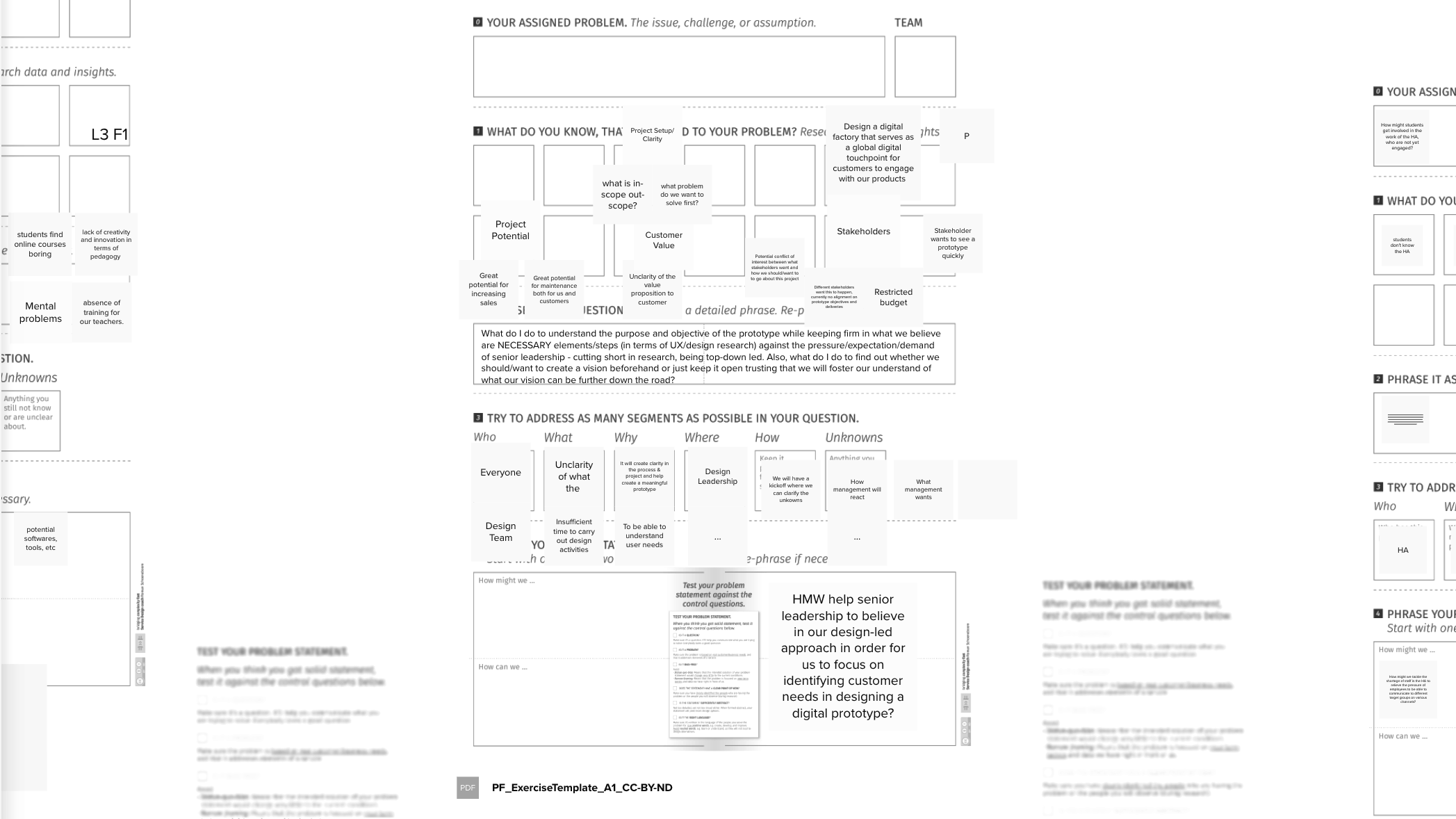
Digital workshop templates
Collaborative MURAL templates designed to support remote problem framing sessions with clearer flows, structured activities, and integrated facilitation checklists.
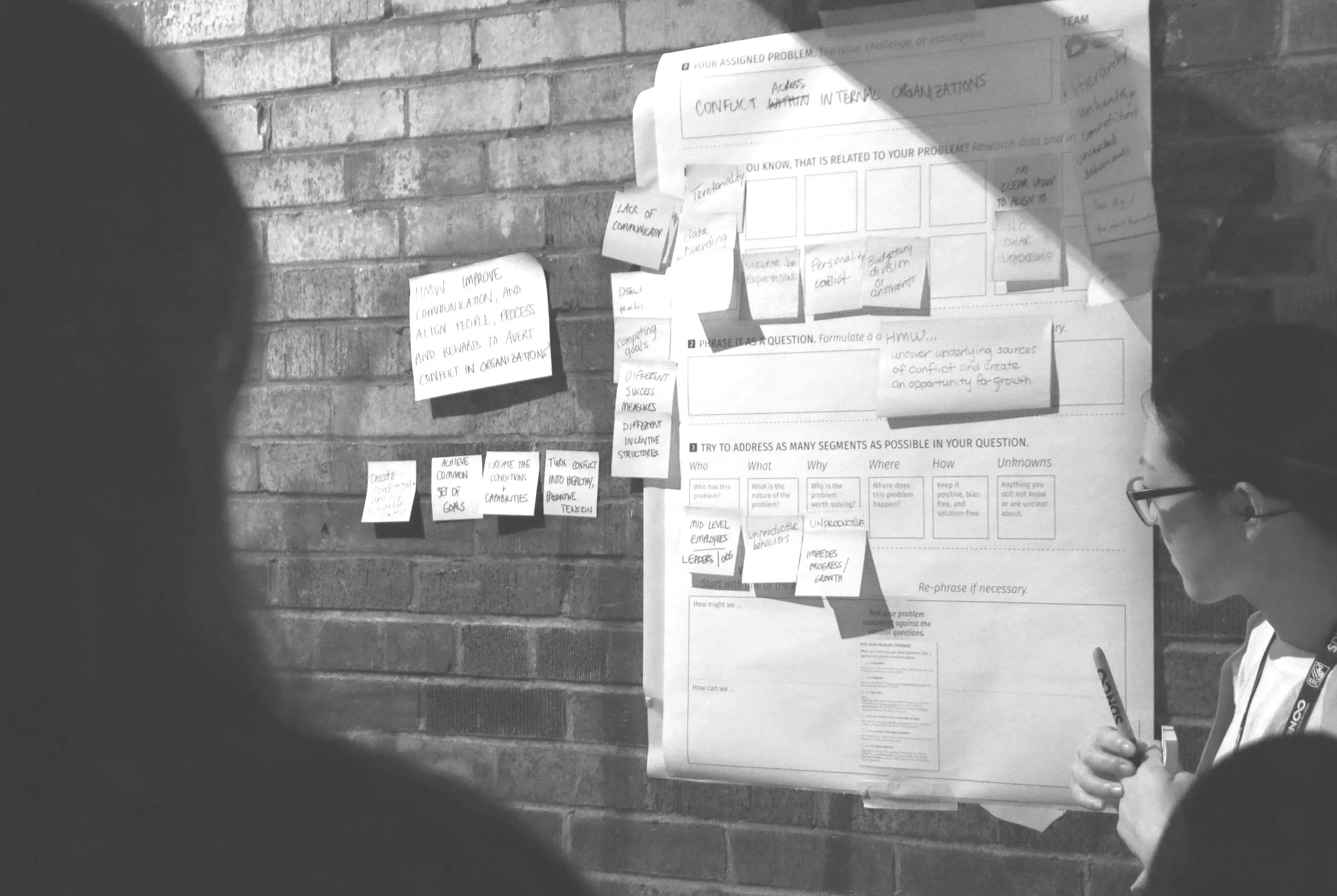
Live facilitation session
Participants working collaboratively around large-format A0 problem framing canvases using post-its to align assumptions, challenges, and strategic direction.
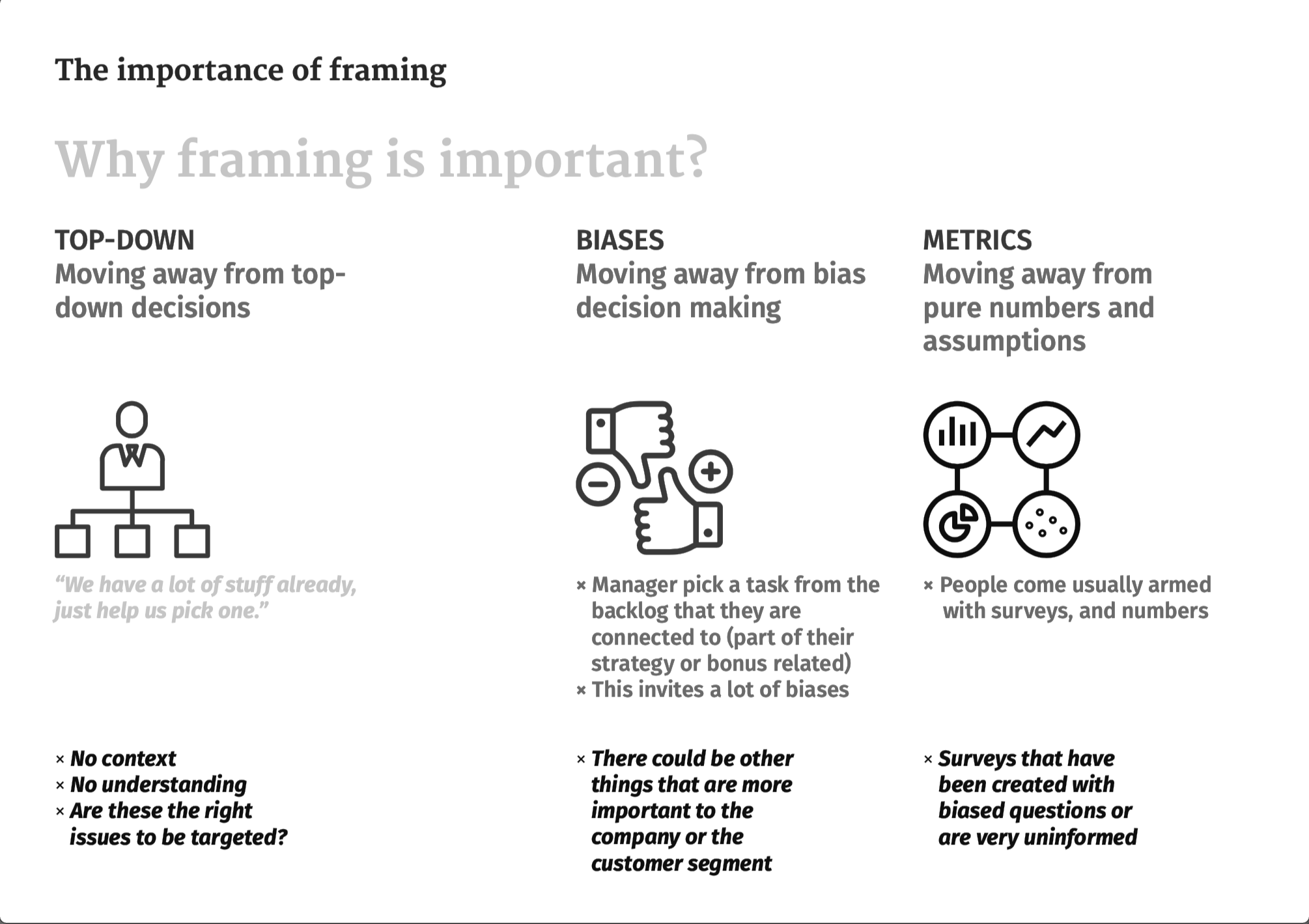
Workshop learning content
Slides and visual frameworks from the workshop explaining the role of framing, assumptions, stakeholder alignment, and structured decision-making.
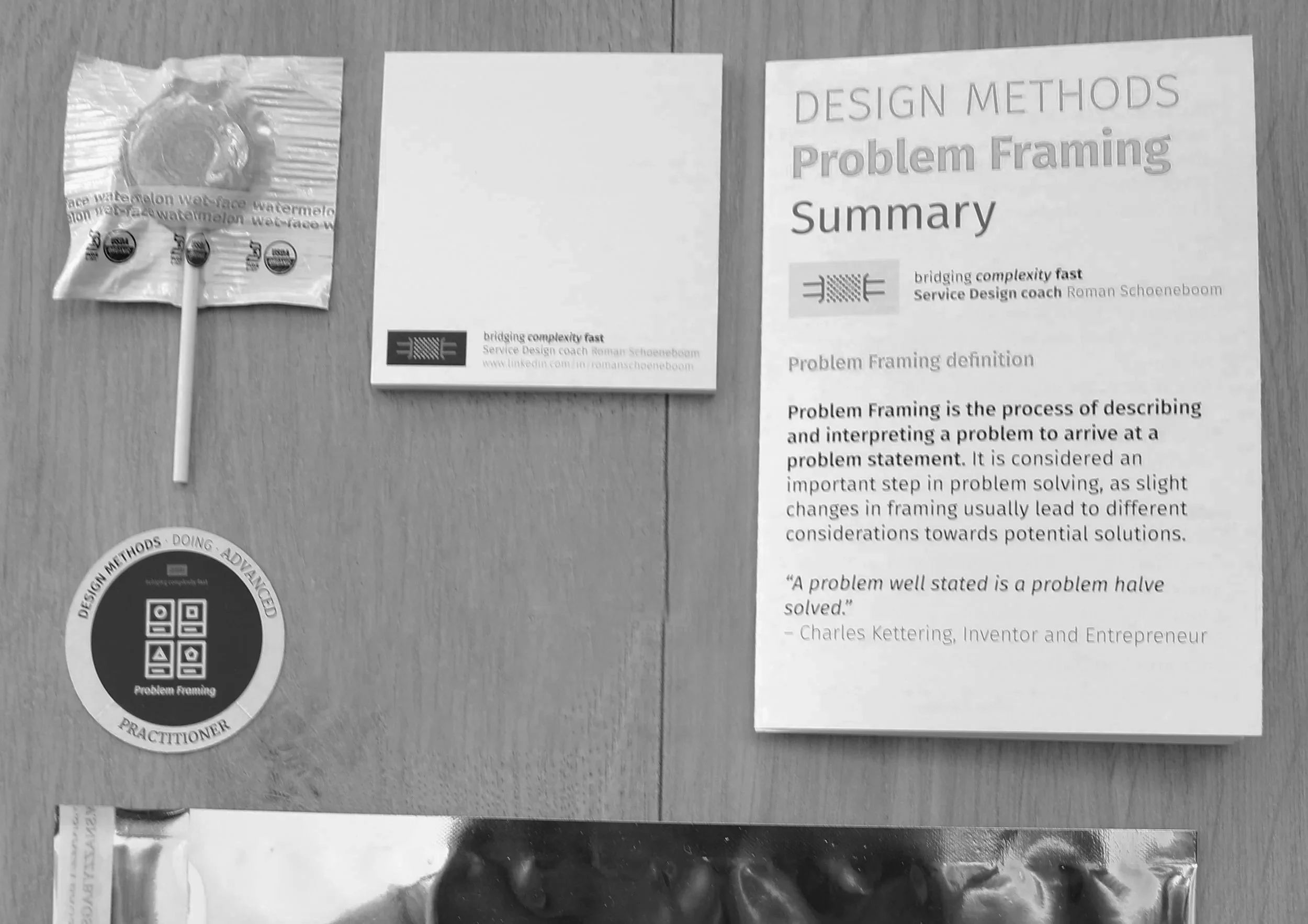
Takeaway pack
Physical workshop giveaway including summary handouts, stickers, post-its, and facilitation essentials designed to support continued learning beyond the session.
Operationalising facilitation
Building reusable facilitation systems rather than isolated workshops.
As a DesignOps practitioner, I increasingly approached facilitation as an operational system rather than one-off workshop delivery.
Many workshop formats evolved into reusable facilitation products supported through templates, canvases, facilitator guides, training structures, visual systems, reusable exercises, and modular workshop formats that could scale across teams and organisational environments.
This operational approach reduced preparation overhead, improved consistency, enabled faster onboarding of facilitators, and supported sustainable capability building beyond individual sessions.
Included systems and assets
Facilitator guides
Structured support materials helping facilitators deliver workshops consistently and confidently.
Onboarding materials
Learning resources supporting new facilitators, participants, and capability-building initiatives.
Workshop playbooks
Step-by-step facilitation structures covering timing, activities, transitions, and delivery guidance.
Reusable learning assets
Exercises, visual systems, toolkits, and workshop materials supporting continuous learning beyond sessions.
Reusable canvases & templates
Visual collaboration tools designed for repeated use across teams and organisational contexts.
Collaboration frameworks
Structured facilitation approaches supporting alignment, co-creation, and organisational collaboration.
Modular workshop systems
Flexible workshop structures adaptable to different audiences, goals, and organisational needs.
Facilitation support tools
Operational tools helping workshops scale effectively across larger programmes and transformation environments.
Facilitation insights
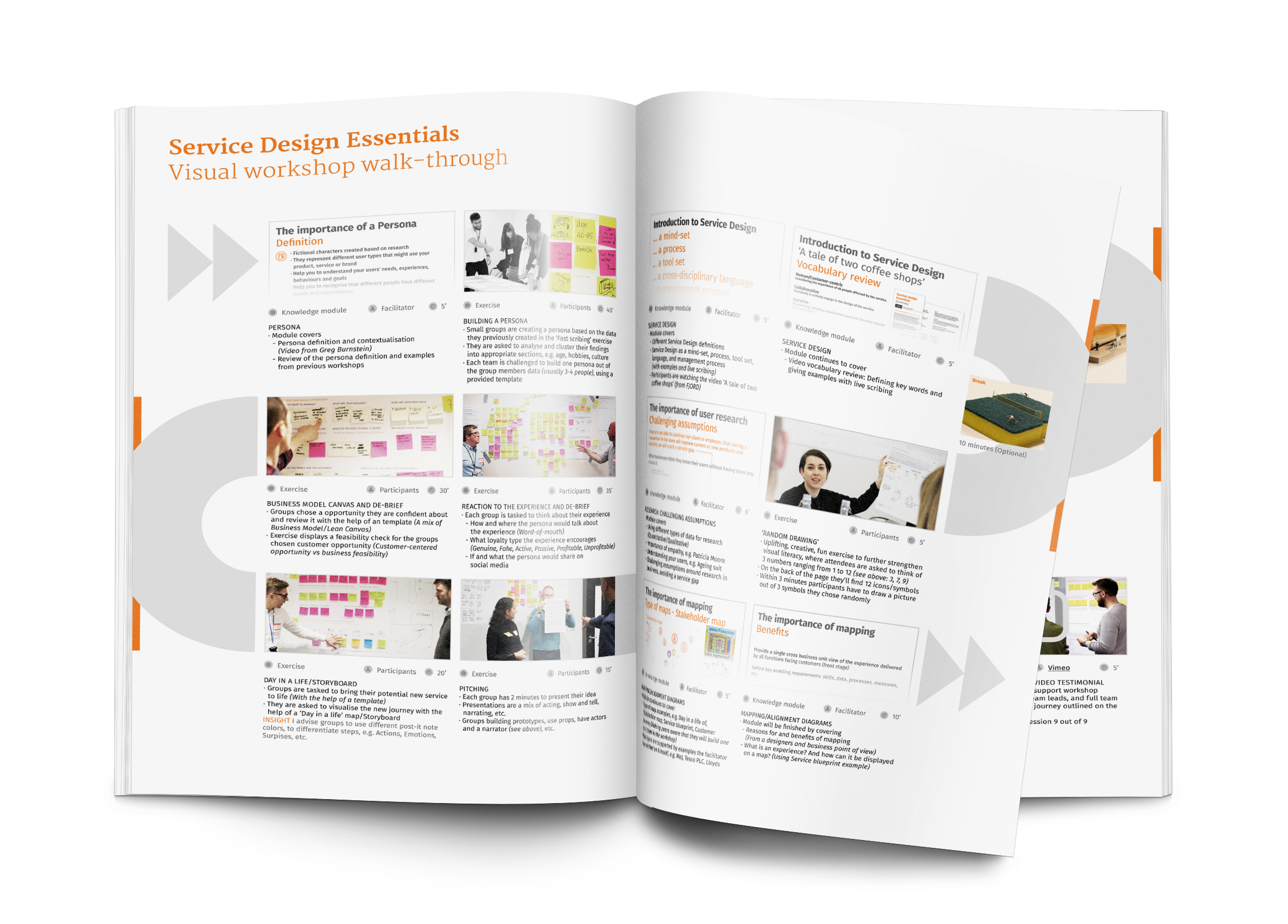
The power of training — supporting transformation through design education
Self-published · 2020
The documentation shows how workshops were designed, tested, iterated, and operationalised at scale — including reusable canvases, facilitation guides, learning systems, and visual collaboration tools. These formats were created to help large organisations build clarity, alignment, collaboration, and practical learning experiences across teams and stakeholders.
Insights from Delivering In-house Service Design Training
Touchpoint Vol. 11 No. 2 · 2019
An article exploring the development of an in-house service design training program within Lloyds Banking Group, highlighting the creation of training infrastructure, facilitator development, and key lessons learned while supporting large-scale organisational transformation.
Testimonials
“I was particularly impressed at his facilitation skills at a workshop involving a wide range of stakeholders. His meticulous preparation, clarity, and professional adoption of the facilitation role meant that this was a highly productive event.”
- Dr. Debora Price, Professor for Social Gerontology, Manchester University
Certifications
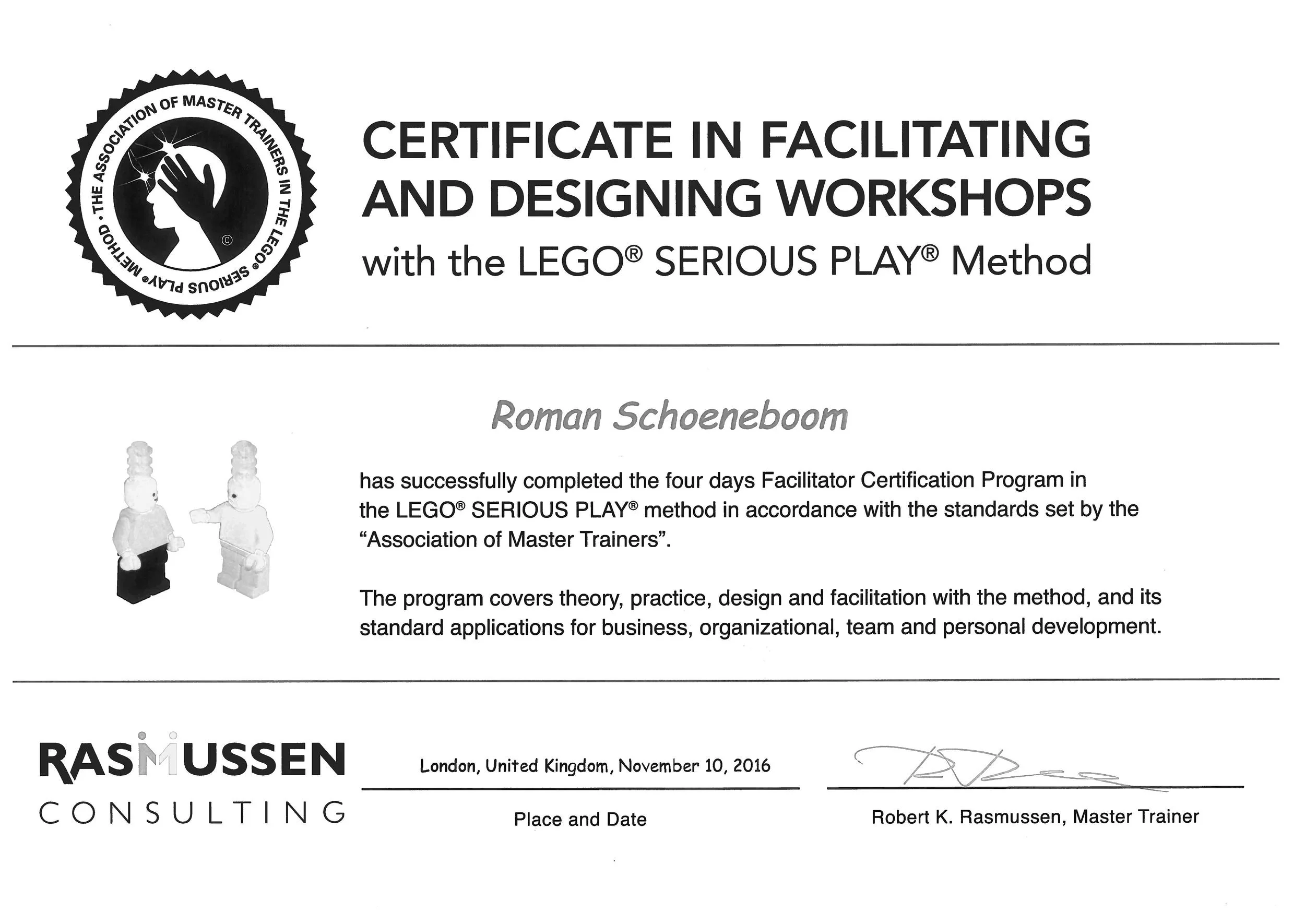
LEGO® Serious Play® Certified Facilitator
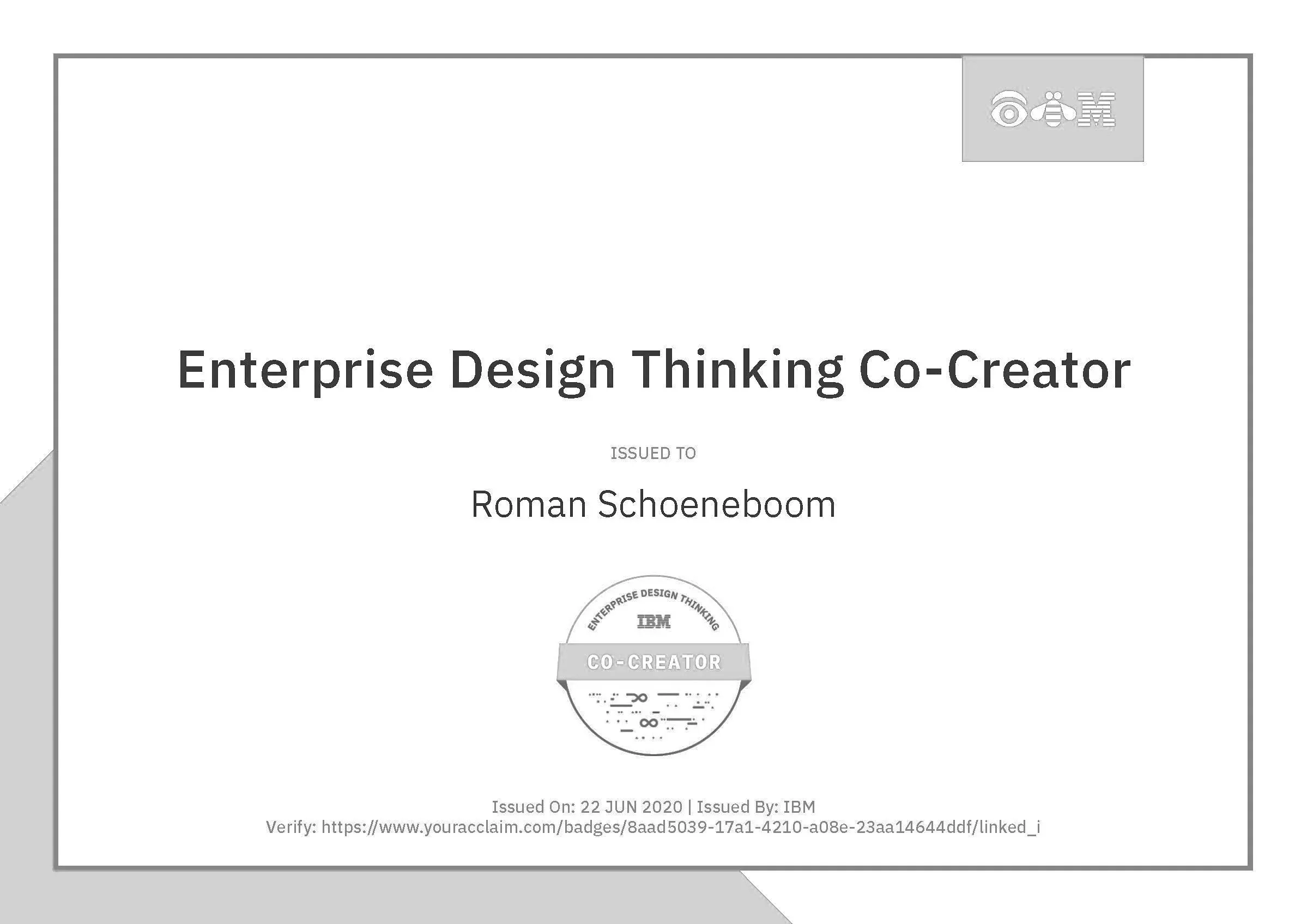
IBM Enterprise Design Thinking
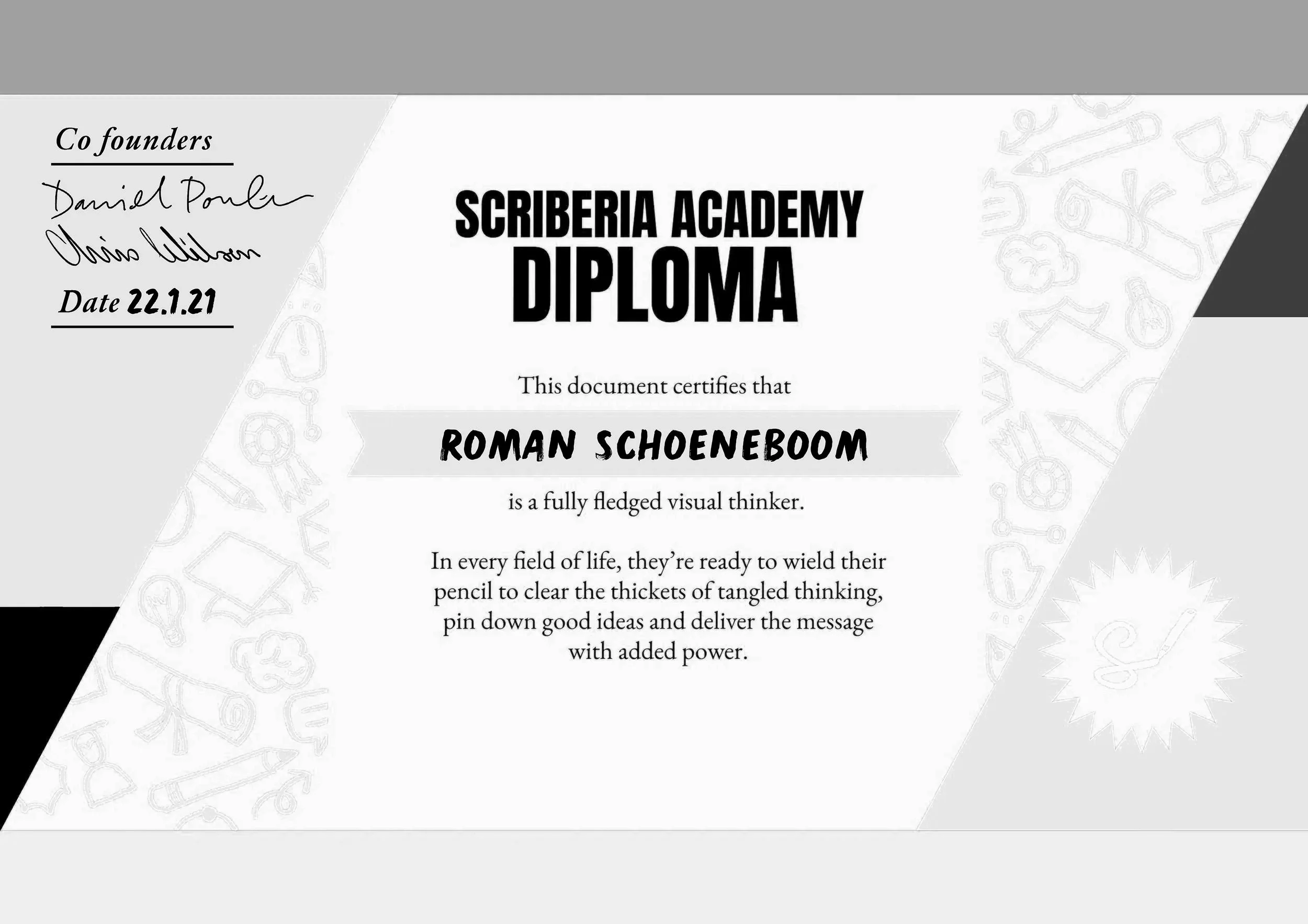
Visual Facilitation & Collaborative Methods
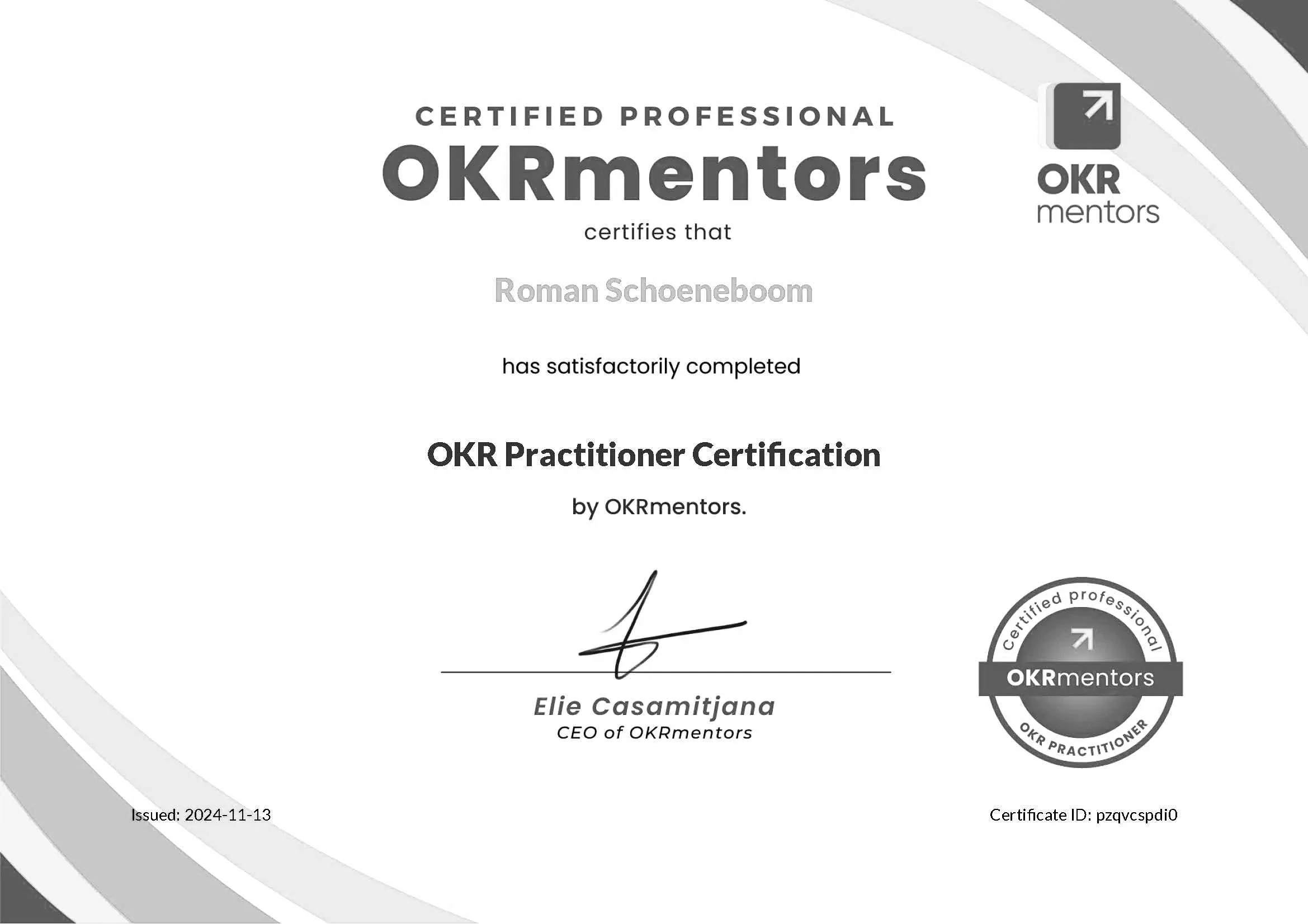
OKR Practitioner Certification